Focus sessions
At ECCB 2026, focus sessions are a scheduled part of the scientific programme that concentrates on a specific topic or theme within computational biology, allowing speakers and participants to explore that particular area in depth. It differs from broader scientific sessions by narrowing in on targeted subjects (often emerging methods, focused research questions, or community-driven themes) and facilitates detailed discussion, exchange of ideas, and interaction among experts and attendees interested in that niche. These sessions are integrated alongside keynotes, highlight talks, poster sessions, and workshops in the ECCB programme to help researchers dive deeper into focused areas of interest within the broader field of computational biology.

From data to discovery: expanding the frontiers of computational biology
1 September (10:30 - 11:30)
Advances pioneered by computational biologists are redefining what is possible in data analysis, visualization, and collaboration. This session will highlight transformative approaches that have enabled analyses at unprecedented scale, from phylogenetics, to population-level genomics, and federated data infrastructures. Beyond their technical accomplishment, these tools can catalyze conceptual and cultural shifts: how can they reshape the questions we ask, the expectations of what we can achieve, and the next challenges we face.
Confirmed speakers:
- Bioinformatics infrastructure for early pathogen detection, characterisation and pandemic prevention
Nick Loman – University of Birmingham (UK) – CLIMB, COG-UK - From reference genomes to real-time pandemic tracking: scaling open data at UCSC
Angie Hinrichs – University of California, Santa Cruz (USA) – Genome Browser, UShER Tree - Open infrastructure for viral genomics in the million-genome era
Theo Sanderson – London School of Hygiene & Tropical Medicine (UK) – Taxonium, Pathoplexus
Image generated using ChatGPT (OpenAI), 2026
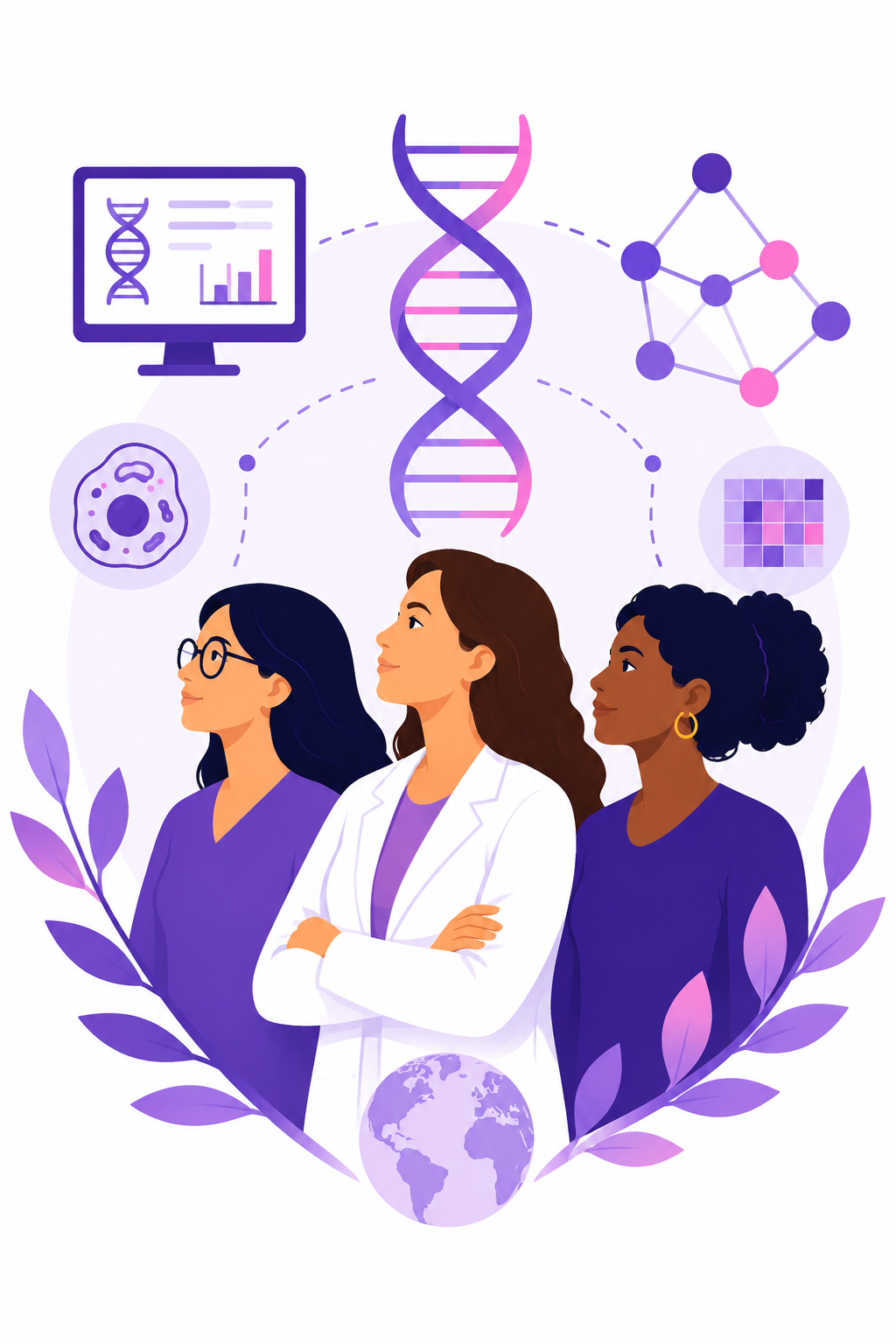
International women in computational biology: stories & journeys
1 September (15:15 - 16:15)
Computational biology has been shaped by the contributions of women across academia, healthcare, industry, and entrepreneurship. This focus session will bring together leading scientists and innovators to share their personal and professional journeys, discuss career development, leadership, mentorship, and explore opportunities and challenges within the field.
The session aims to foster mentorship, strengthen professional networks, increase the visibility of women role models, and promote a more inclusive computational biology community. Through scientific perspectives and personal experiences, speakers will highlight diverse pathways to success and leadership in computational biology.
Confirmed speakers:
- Building Bridges: My Journey in diploid genome assembly and Long-Read Sequencing
Shilpa Garg – University of Manchester (UK) - From Blast2GO to the SQANTIverse: a female journey for bioinformatics excellence
Ana Conesa – Spanish National Research Council (CSIC) & Institute for Integrative Systems Biology (I2SysBio) (Spain)
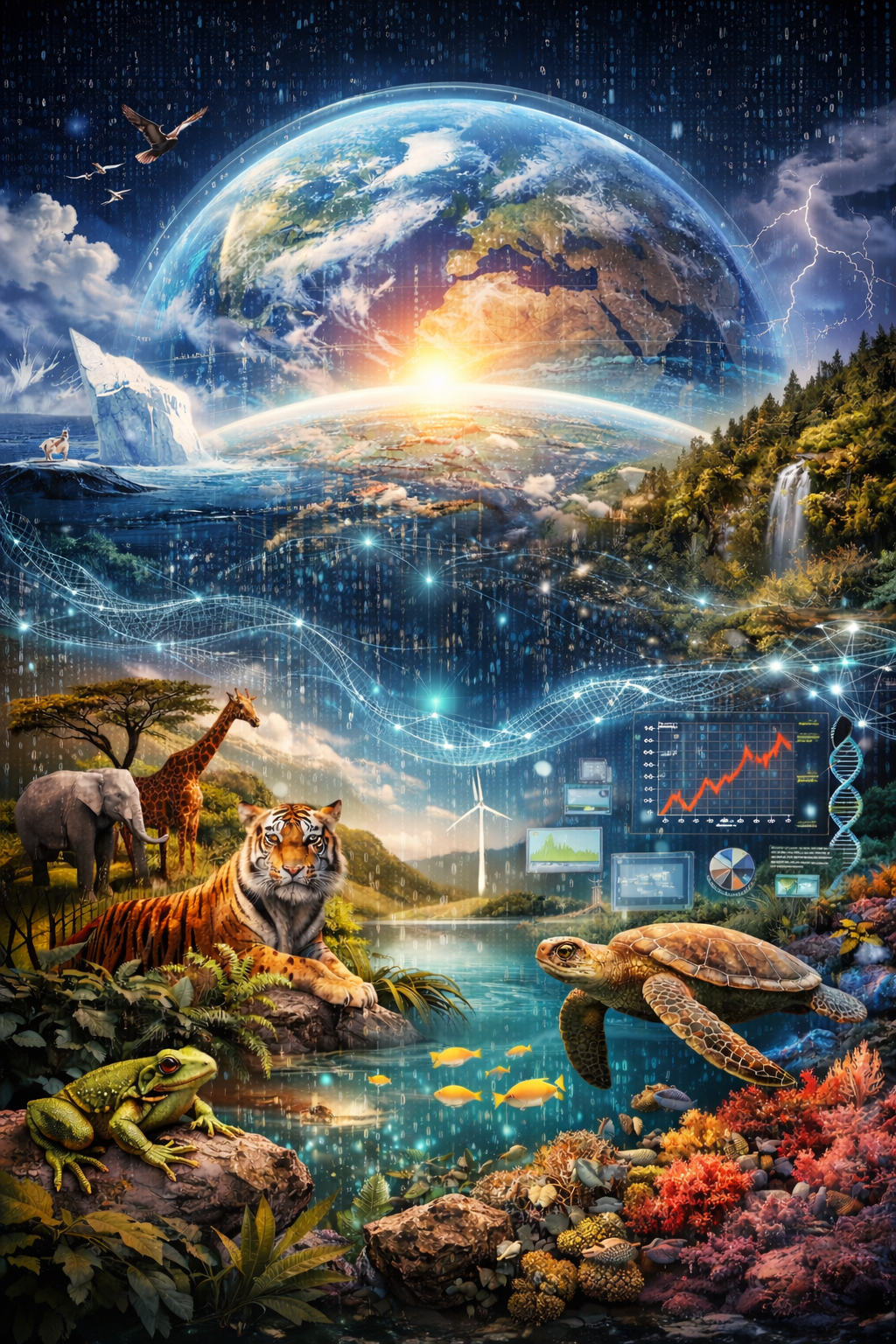
Digital earth, living planet: biodiversity and climate in the age of big data
2 September (13:15 - 14:15)
The session will explore how the rapidly growing volume and diversity of biodiversity and environmental data. Complementary perspectives will connect biodiversity informatics from genomics and natural history collections to species and environmental monitoring, remote sensing and climate data. Together, the talks can be integrated and translated into useful evidence for addressing biodiversity and climate challenges.
Confirmed speakers:
- Pascal Peduzzi – United Nations Environment Programme (UNEP), GRID-Geneva (Switzerland) – Director
- Panel Discussion led by Robert Waterhouse, with contributions from:
- Pascal Peduzzi, Director, UNEP/GRID-Geneva, Switzerland
- Katharina F. Heil, Programme Manager Communities, ELIXIR Europe
- Michael Greef, ETH Zurich, Department of Environmental Systems Science, Switzerland.
Image generated using ChatGPT (OpenAI), 2026