Tutorials & workshops
ECCB 2026 will feature a dedicated day of tutorials workshops on Thursday 3 September 2026
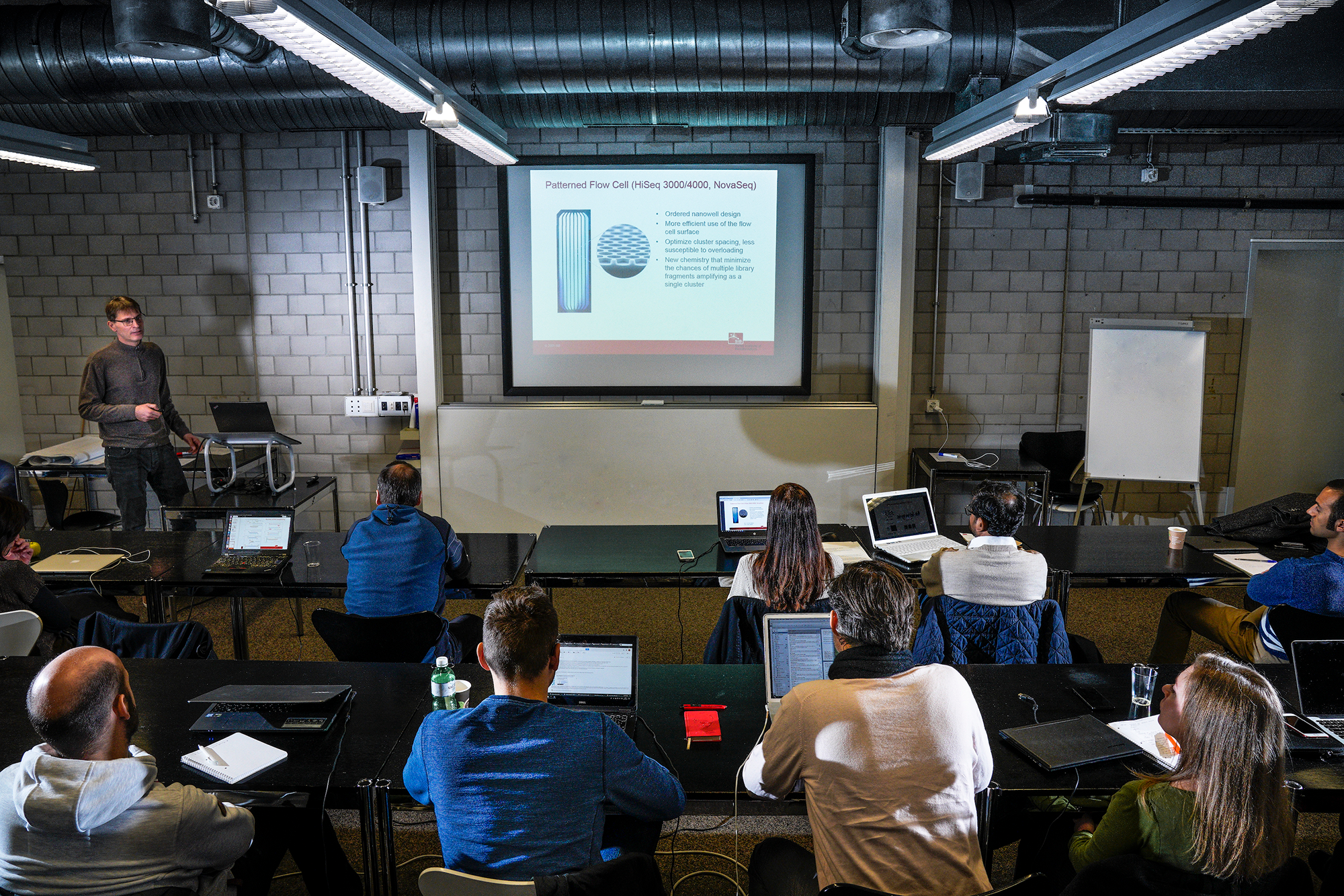
Registration to ECCB Tutorials and Workshops
From 1 July to 14 August 2026, a dedicated registration period is available for participants wishing to attend only the ECCB 2026 Tutorials and Workshops, independently of the main conference registration.
Registration remains open until the capacity of each tutorial or workshop is reached. As places are limited, registrations are allocated on a first-come, first-served basis.
Participants may register for one or several ECCB tutorials and workshops, subject to availability. To complete their registration, participants must either create an ECCB 2026 registration account or, if they already have one, log in using their existing credentials before proceeding with the registration process. Information on the available ECCB tutorials can be found here, while the list of workshops is available here.
The applicable registration fees are those listed in the Registration Fees section.
Please note that all registrations are subject to the Cancellation and Refund Policy. Participants are encouraged to review the applicable terms and deadlines before completing their registration.
Participants who are members of LS2 or ISCB and wish to benefit from the corresponding membership rates are kindly requested to contact the ECCB 2026 Secretariat at eccb2026@sib.swiss before registering.
For any questions regarding registration, tutorials, workshops, or eligibility, please contact the ECCB 2026 organizers at eccb2026@sib.swiss.
Important dates
- 3 March 2026 - registration to tutorials and workshops open
- 28 May 2026 - final tutorials and workshops schedule (including presenters names)
- 3 September 2026 - tutorials and workshops from 9:00 - 17:30 at the CICG Congress venue.
ECCB tutorials and workshops provide an informal setting to learn about the latest bioinformatics methods, discuss technical issues, exchange research ideas, and share practical experiences on focused or emerging topics in bioinformatics. They only take place on-site.
Please note that you need to register for your tutorial or workshop of choice via the online registration system (once registrations are open), they are not included in the conference fee. Tutorials and workshops have a limited number of participants they can take - register on time!
Tutorials and workshops at ECCB
Tutorials aim to provide participants with lectures and practical training covering topics relevant to the bioinformatics field. It offers participants an opportunity to learn about new areas of bioinformatics research, to get an introduction to important concepts, or to develop advanced skills in areas they are already familiar with.
Workshops encourage participants to discuss technical issues, exchange research ideas, and share practical experiences on some focused or emerging topics in bioinformatics.
Each tutorial/workshop will be organized as a full day (9:00 - 17:30) or a half-day event (9:00 - 12:45 or 13:45 - 17:30). If you choose a half day tutorial/workshop, you are welcome to register for another half day tutorial/workshop if space is available.
Tutorials
| Time | Activity |
|---|---|
| 9:00 - 17:30 (full day) - Room Foyer Infirmerie |
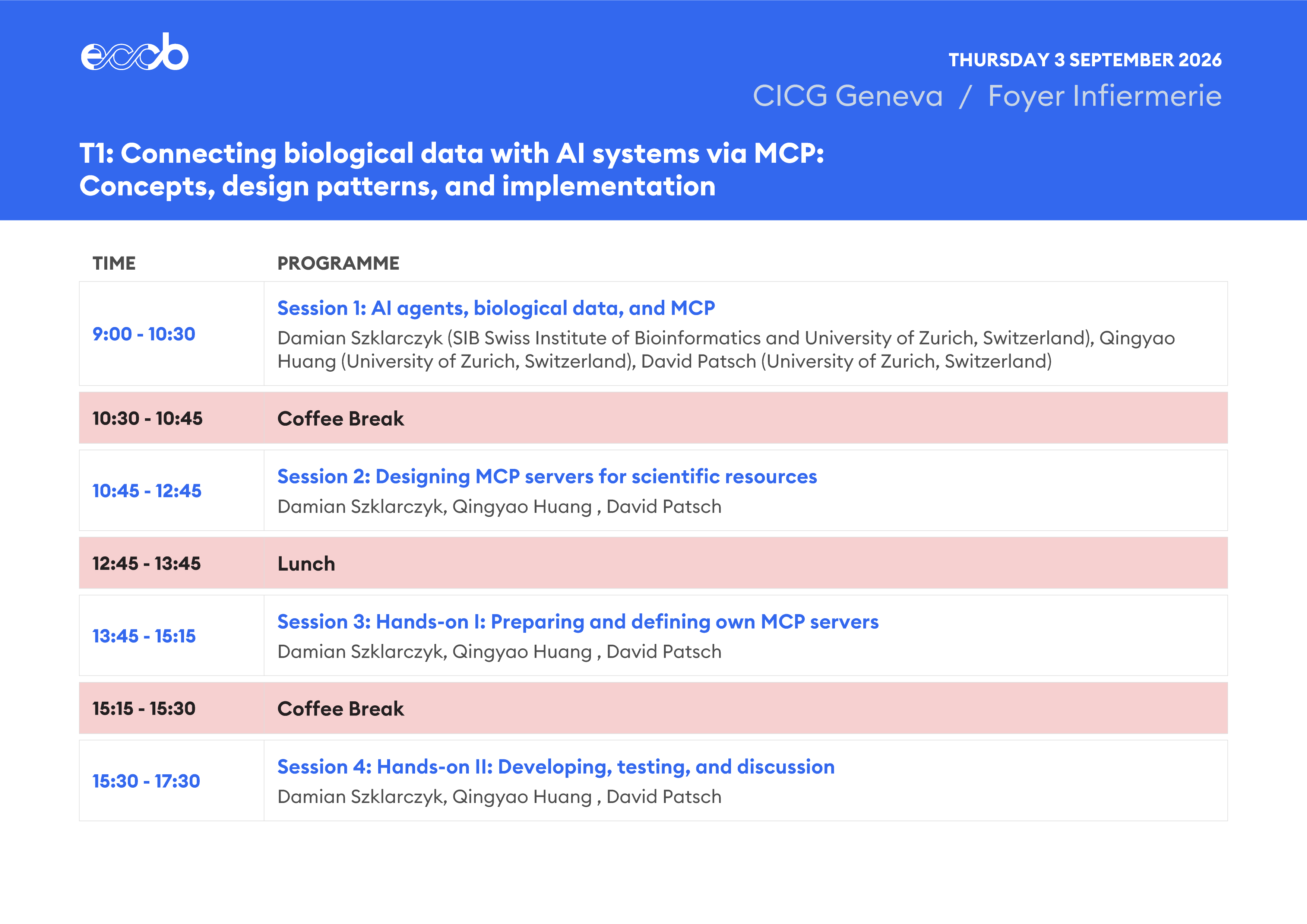
T1: Connecting biological data with AI systems via MCP: concepts, design patterns, and implementation
|
|
Organized by: Damian Szklarczyk Scientific area: Systems biology, multi-omics integration and modeling Overview: Large-language-model (LLM) agents are rapidly transforming how researchers access, explore, and interpret biological data. As these systems become capable of querying tools, synthesizing results, and combining information across resources, they begin to allow researchers to obtain fast, context-aware interpretations of their biological datasets. The Model Context Protocol (MCP) provides a standardized mechanism that allows AI systems to query, and operate scientific tools and datasets. By exposing resource capabilities in a controlled and flexible manner, MCP enables AI agents to interact and directly reason over the biological datasets.This workshop introduces MCP from both conceptual and, primarily, practical perspectives. We will discuss how AI agents interact with scientific data and how an MCP server allows resources to tailor, filter, and restructure their data specifically for LLM agents. Participants will learn how MCP differs from traditional programmatic interfaces, and why AI-oriented data access requires fundamentally different design choices. During the workshop attendees will work with a prepared MCP server in Python, create a set of tools and their descriptions, shape outputs for clarity and grounding, and experiment directly with a provided LLM agent. Through interactive testing, participants will observe how an AI agent uses exposed tools, grounds its responses, and reasons over their data and tool outputs.
|
|
| 9:00 - 17:30 (full day) - Room 15 |
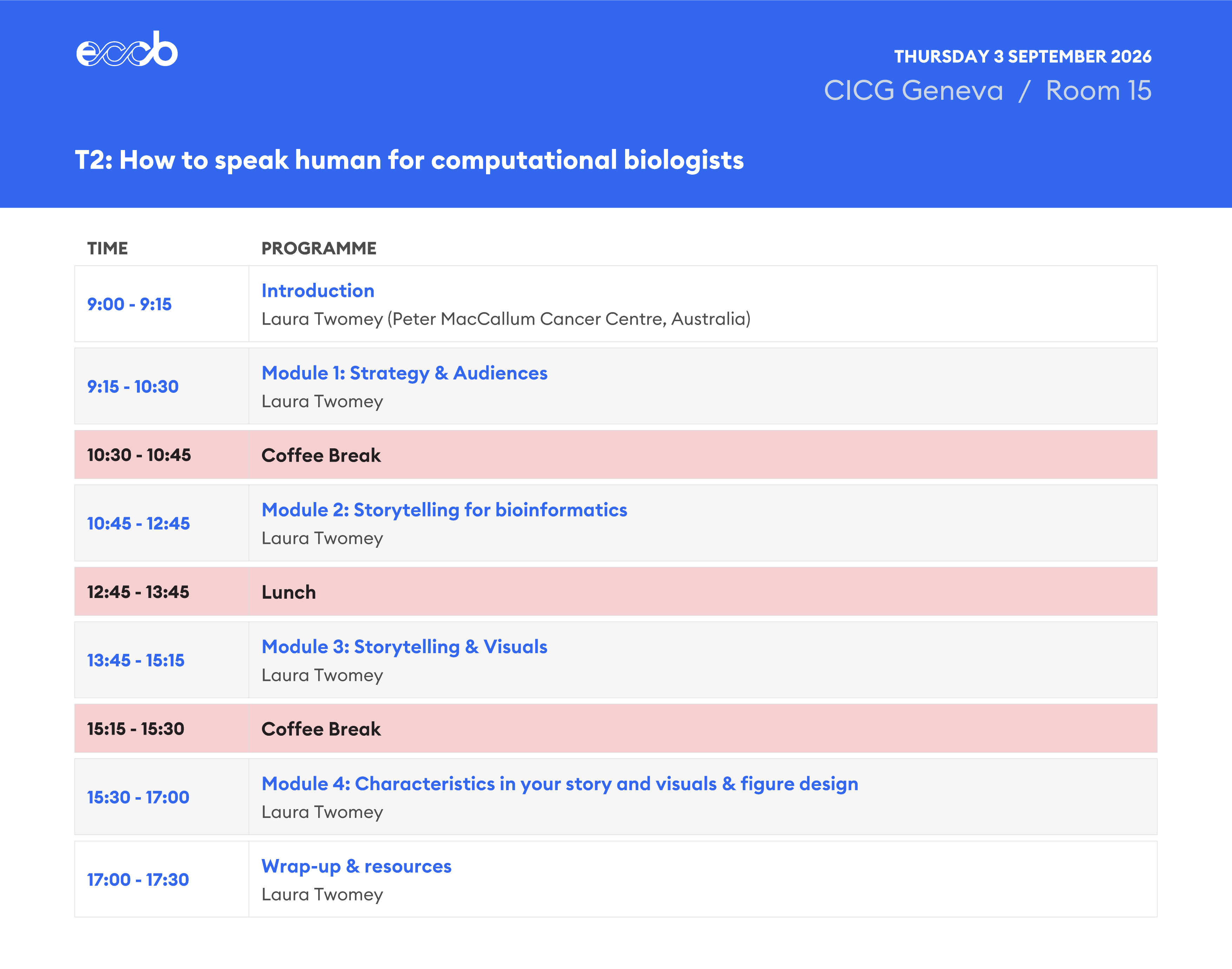
T2: How to speak human for computational biologists
|
|
Organized by: Laura Twomey Topic: soft-skills for careers in science Overview: Your research is groundbreaking. Your methods are sophisticated. But can you convince a grant reviewer that your approach will revolutionize cancer research? Can you make a wet lab biologist actually excited about your statistical framework? Pitch your research to a clinician in an elevator? These aren't nice-to-have skills - they are essential for getting your research funded, cited, and actually used. This hands-on workshop transforms you from researcher to storyteller. Through interactive exercises and live feedback from peers and instructors, you will learn to craft compelling narratives that hook reviewers in the first 30 seconds, redesign figures to create effective visualizations and explain complex methods to non-specialists without dumbing down your science (or making them wish they were elsewhere). You will leave with practical tools, peer connections, and the confidence to make your next talk, paper, or grant application as impressive as the research behind it. Better communication is not about "selling out" or oversimplifying. It is about ensuring your work has impact. Clear, compelling communication leads to higher citation rates, stronger collaborations and better funding outcomes. If you would like people at a conference to actually remember what you do, this is the workshop for you!
|
|
| 9:00 - 17:30 (full day) - Plenary E |
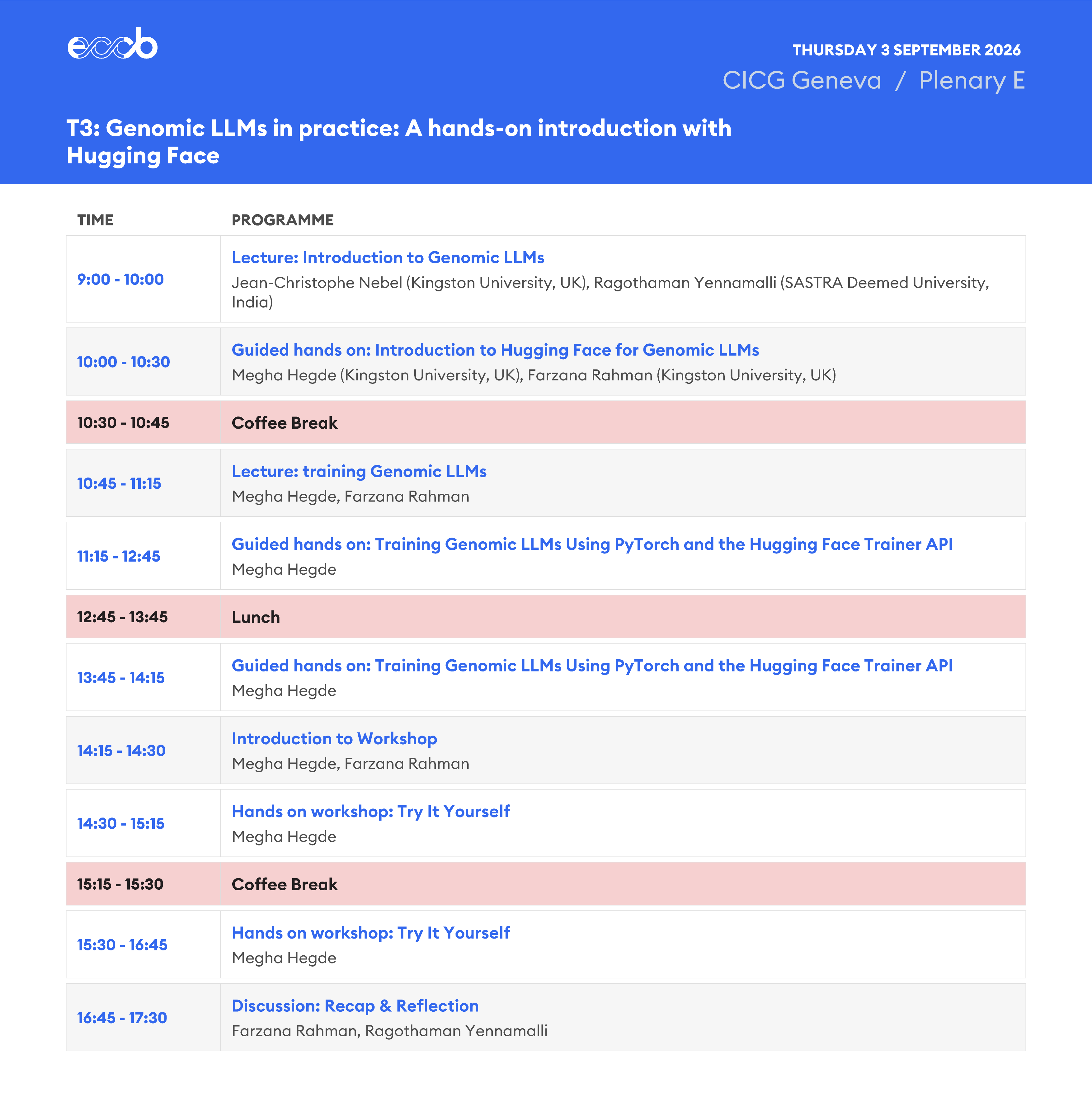
T3: Genomic LLMs in practice: a hands-on introduction with Hugging Face
|
|
Organized by: Megha Hegde, Shashank Ravichandran, Jean-Christophe Nebel, Ragothaman Yennamalli and Farzana Rahman Scientific area: Genomics, epigenomics, and genome editing Overview: This tutorial will demonstrate how large language models (LLMs), initially developed for natural language processing, can be highly effective for genomic modelling by treating DNA sequences as “sentences” composed of “words” using a four-letter alphabet. Instructors will demonstrate how to use Hugging Face and PyTorch to load data, apply tokenisation strategies such as k-mers and byte‑pair encoding, and fine‑tune transformer models like DNABERT for tasks ranging from enhancer classification to splice‑site annotation. We will also survey multimodal architectures and variant‑effect tools such as SpliceTransformer and AlphaMissense, equipping you with practical skills to integrate these models into your genomics workflows. The tutorial is designed for researchers comfortable with Python and having at least a fundamental understanding of machine learning. The tutorial will aim to upskill you to an intermediate level by providing hands-on experience, using Python with Google Colab and the Hugging Face libraries. By the end of this tutorial, participants will be able to: 1. Understand and implement genomic sequence representation using large language models, including DNA tokenisation strategies (k-mers and byte-pair encoding) and transformer architectures such as DNABERT. (Revised Bloom’s Taxonomy [RBT] Assessment: Understand) 2. Develop and fine-tune genomic LLM pipelines in Python, using PyTorch and Hugging Face to preprocess data, train models, and evaluate performance on tasks such as enhancer classification and splice-site prediction. (RBT Assessment: Apply and Analyze) 3. Critically apply and integrate pretrained and multimodal genomic models (e.g., SpliceTransformer and AlphaMissense) into real-world genomics workflows, interpreting model outputs for biological insight. (RBT Assessment: Create and Analyze)
|
|
| 9:00 - 17:30 (full day) - Plenary F |
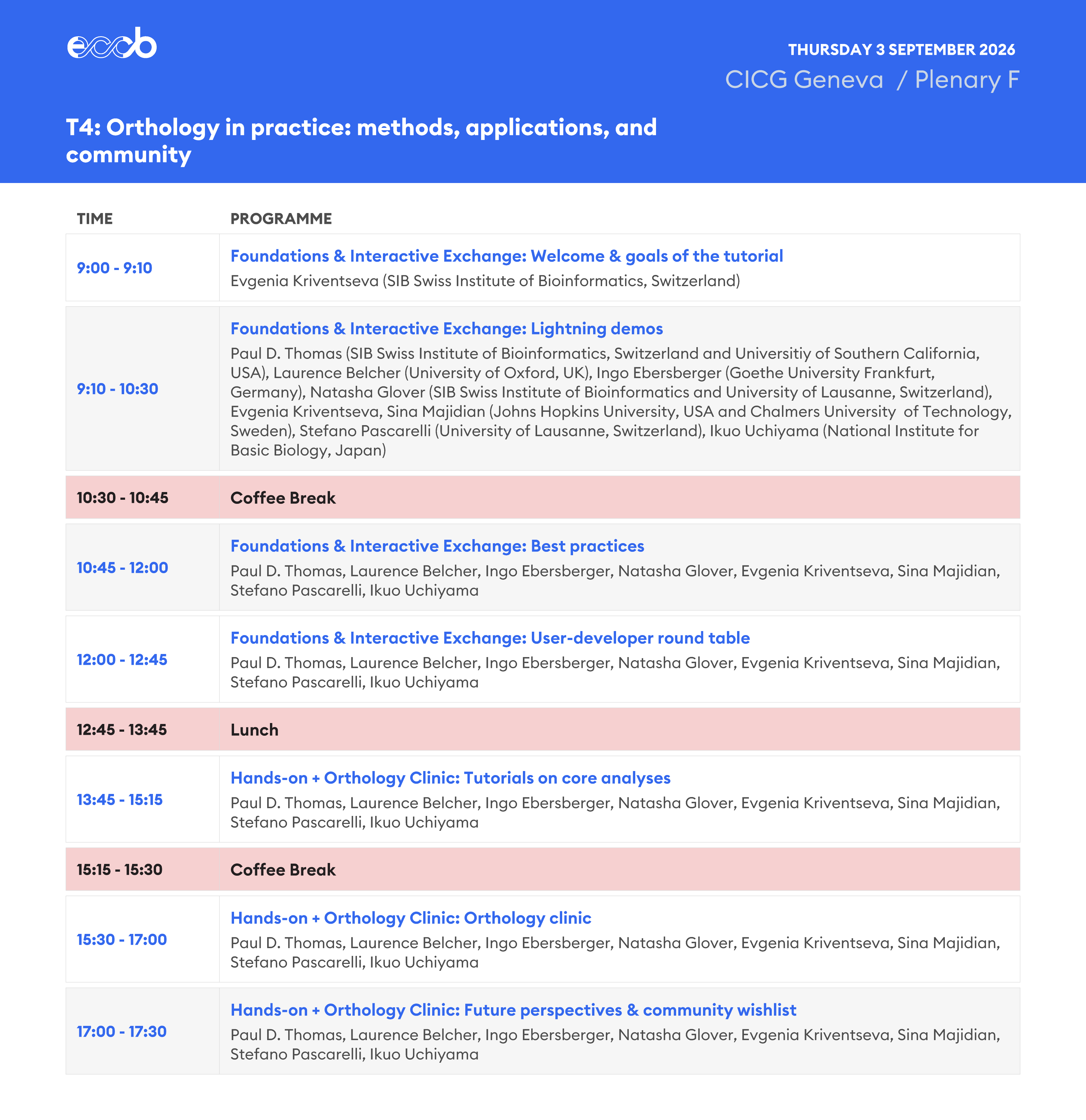
T4: Orthology in practice: methods, applications, and community needs in the era of large-scale genomics
|
|
Organized by: Evgenia Kriventseva, Travis Wheeler, Natasha Glover, Sina Majidian and Stefano Pascarelli Scientific area: Genomics, epigenomics, and genome editing Overview: Comparing genes and genomes across species is current practice in many fields of computational biology, especially as datasets from large-scale sequencing projects become available. Orthology inference is central to comparative genomics, gene family analysis, functional annotation, and the interpretation of large genomic datasets. Yet many researchers rely on orthology tools without formal training in their conceptual foundations, assumptions, or the practical differences between available methods. This tutorial provides an accessible, method-balanced introduction to the field, delivered jointly by developers of leading resources (OrthoFinder, OMA, OrthoDB, InParanoid, fDOG, PANTHER, MBGD, and others) and by experienced users across domains. The morning session will combine short, focused presentations and interactive discussions. Participants will learn what orthology is (and is not), how different tools define and implement hierarchical orthologous groups, when methods agree or diverge, and which approaches suit specific applications. We will highlight best practices for gene family analysis, paralogy handling, functional inference, multi-species comparisons, and integration into downstream pipelines. The afternoon session will offer hands-on practice with several tools, followed by an “orthology clinic” where participants can bring their own data or questions. Throughout the day, we will conduct structured round tables to address user challenges and feature requests, providing method developers with direct and actionable feedback for future tool design.
|
|
| 9:00 - 17:30 (full day) - Room 9 |
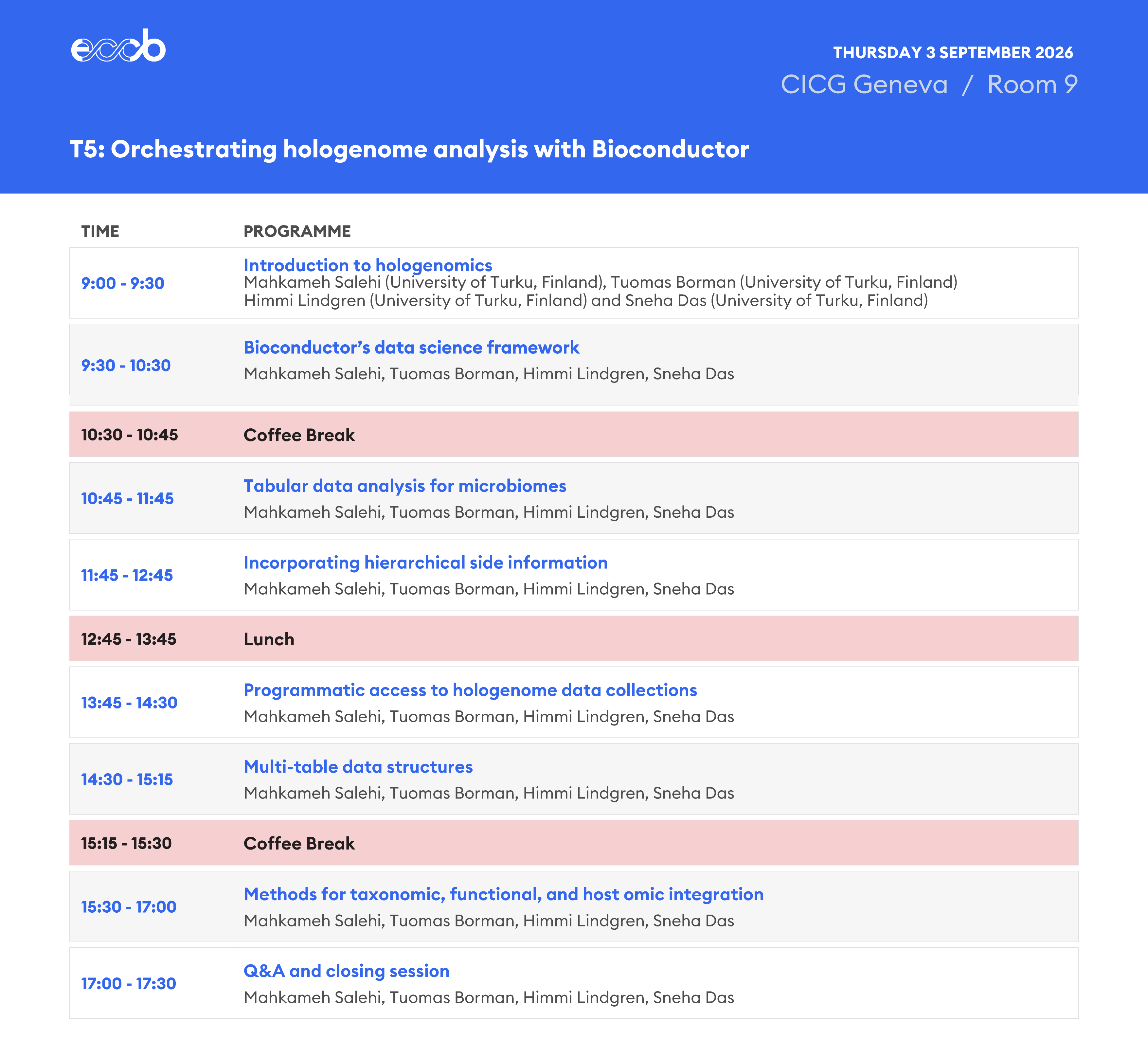
T5: Orchestrating hologenome analysis with Bioconductor
|
|
Organized by: Mahkameh Salehi and Tuomas Borman Scientific area: Systems biology, multi-omics integration and modeling Overview: Hologenomics is an emerging area of computational systems biology, examining the collective genetic material of host systems and their associated microbiomes. While individual omics methodologies are well-established, systematic frameworks for integrative hologenome data analysis remain underdeveloped, limiting our understanding of hologenomes. Bioconductor provides dedicated tools encompassing genomics, metagenomics, metatranscriptomics, and metabolomics, making it an ideal platform for integrative hologenomic analyses. We address the current gaps in hologenome data science by leveraging this comprehensive research software ecosystem for multi-omics integration. Session Goals and Scope: We will guide participants through an integrative data science workflow using open demonstration data and examples from the "Orchestrating Microbiome Analysis with Bioconductor" online book (microbiome.github.io/OMA), which includes contributions from a number of developers. The tutorial emphasizes practical application of Bioconductor's latest integrative data structures and tools for multi-table analyses. Learning Outcomes: Participants will gain skills to:
Level: Intermediate. Prerequisites include basic R programming competency and familiarity with R/Bioconductor methods in one or more omics domains. Relevance: This tutorial will provide bioinformaticians with essential skills to tackle the growing complexity of multi-omics datasets in computational systems biology.
|
|
| 9:00 - 17:30 (full day) - Room 10 |
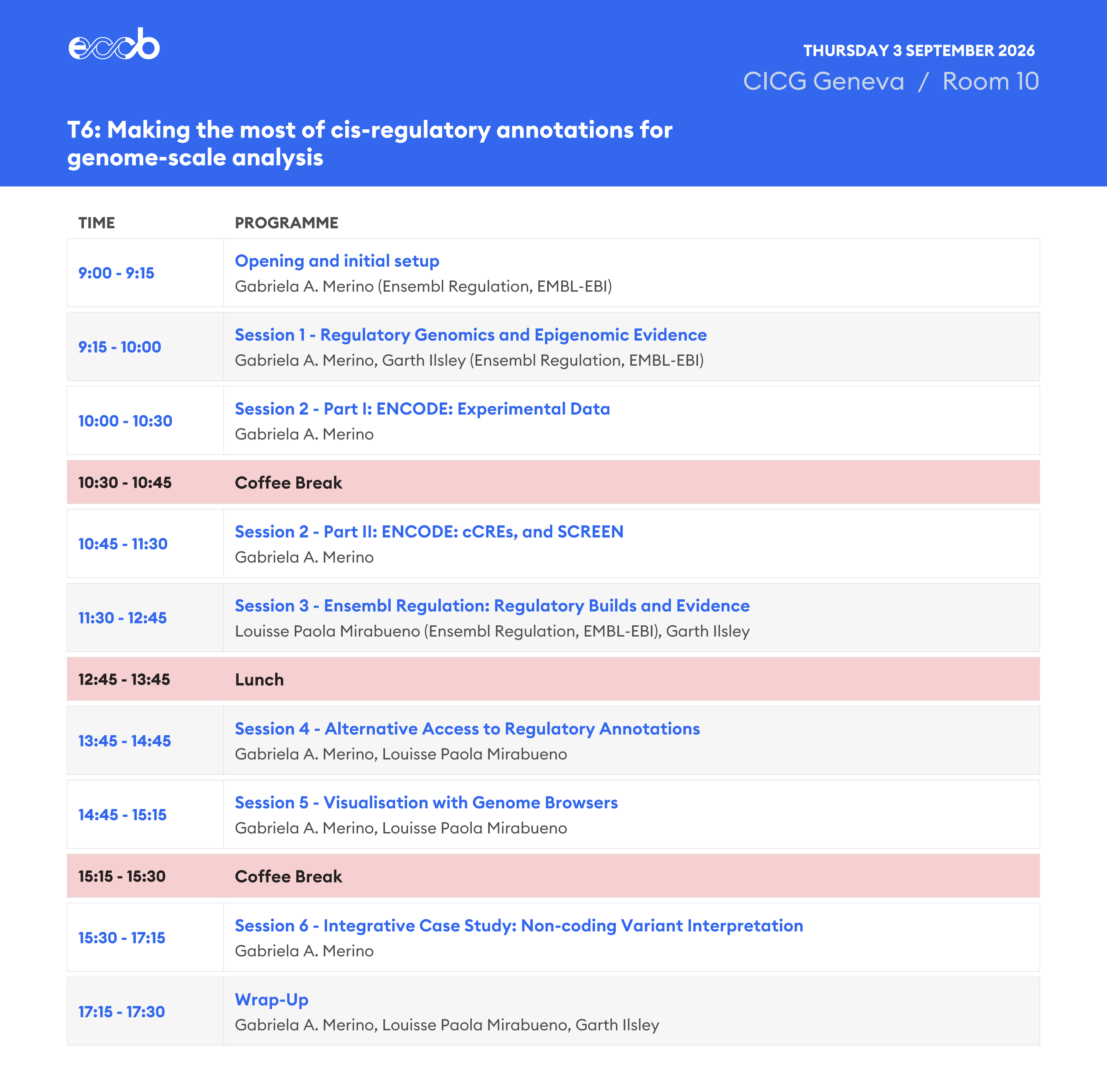
T6: Making the most of cis-regulatory annotations for genome-scale analysis
|
|
Organized by: Gabriela Merino and Garth Ilsley Scientific area: Transcriptomics and gene regulation Overview: Cis-regulatory elements, such as promoters and enhancers, play a central role in gene regulation. Effective use of regulatory annotations is therefore essential for elucidating the regulatory control of specific genomic loci, identifying tissue-specific enhancers across the genome, and filtering and interpreting non-coding genetic variation. Large-scale community efforts, including ENCODE for human and mouse, and Functional Annotation of Animal Genomes (FAANG) projects for farmed animals, have generated thousands of epigenomic datasets, which are distributed across multiple repositories. Taking advantage of these datasets, ENCODE has recently expanded its registry of candidate cis-regulatory elements for human and mouse, while Ensembl has produced a comprehensive catalogue of regulatory features for ten species (human, mouse, three livestock, and five aquaculture species). Although these resources are publicly available and freely accessible,analysing and interpreting them remains challenging. This tutorial emphasises the complementary roles of key resources and tools, highlighting best practices for accessing regulatory annotations, understanding their supporting evidence, and integrating them into reproducible genomic workflows. It provides a practical introduction to regulatory genomics, focusing on how regulatory elements are derived from epigenomic data and how they can be explored across widely used community resources. Participants will learn how to navigate and compare regulatory annotations using the Ensembl Genome Browser, the new Ensembl Regulation subsite, and the ENCODE SCREEN portal. The tutorial further demonstrateshow to manipulate and visualise regulatory data using R and Python, as well as genome browsers such as IGV.
|
|
| 9:00 - 17:30 (full day) - Room 1 |
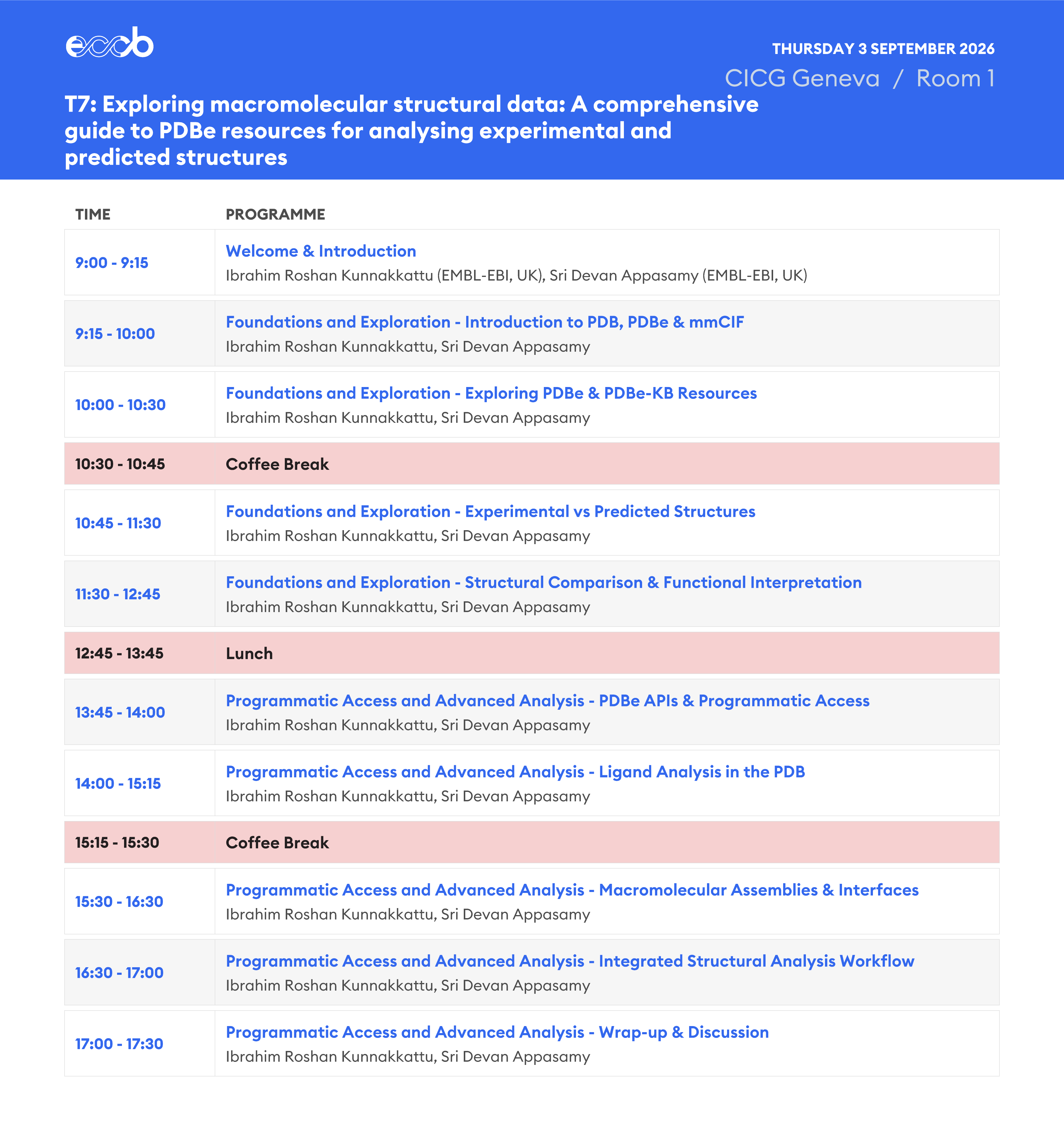
T7: Exploring macromolecular structural data: a comprehensive guide to PDBe resources for analysing experimental and predicted structure
|
|
Organized by: Ibrahim Roshan Kunnakkattu and Sri Devan Appasamy Scientific area: Proteins and structural biology Overview: The Protein Data Bank in Europe (PDBe) serves as a hub for macromolecular structure data, providing essential infrastructure for structural biology research. This one-day tutorial offers participants a comprehensive overview of PDBe's data organisation, web resources, and computational tools for analysing both experimental and predicted structures. The morning session introduces the foundations of structural data resources, including an overview of the Worldwide Protein Data Bank (wwPDB), the process of structure deposition and curation, and the mmCIF file format used to represent structural data. Participants will learn about PDBe-KB and its aggregated functional annotations contributed by multiple data providers, as well as reference resources for small molecules such as the Chemical Component Dictionary (CCD) and BIRD. The session also introduces AlphaFold DB and demonstrates how predicted structures can be analysed using confidence metrics, structural similarity searches with Foldseek, and variant annotations from AlphaMissense. The afternoon focuses on practical exploration of PDBe resources and tools. Participants will learn how to navigate PDBe entry pages, PDBe-KB protein pages, ligand pages, and complex pages to answer scientific questions using integrated structural annotations. The tutorial will then introduce PDBe REST APIs and the 3D-Beacons network, demonstrating how to retrieve structural data programmatically using Python and perform batch data download. Additional hands-on sessions will cover ligand analysis, including identifying bound ligands, retrieving protein–ligand interaction information, and accessing bioactivity data from ChEMBL. Finally, participants will learn how to analyse macromolecular assemblies and interfaces using the PISA web server and its API to investigate biologically relevant assemblies and intermolecular interactions in PDB structures. This tutorial is highly relevant for computational biologists, structural bioinformaticians, and researchers in drug discovery who need to efficiently access and analyse 3D-structure data. Participants will leave with practical skills to integrate PDBe resources into their research workflows, from simple web-based queries to sophisticated programmatic data mining. All materials and code examples will be provided for continued learning.
|
|
| 9:00 - 17:30 (full day) - Plenary B |
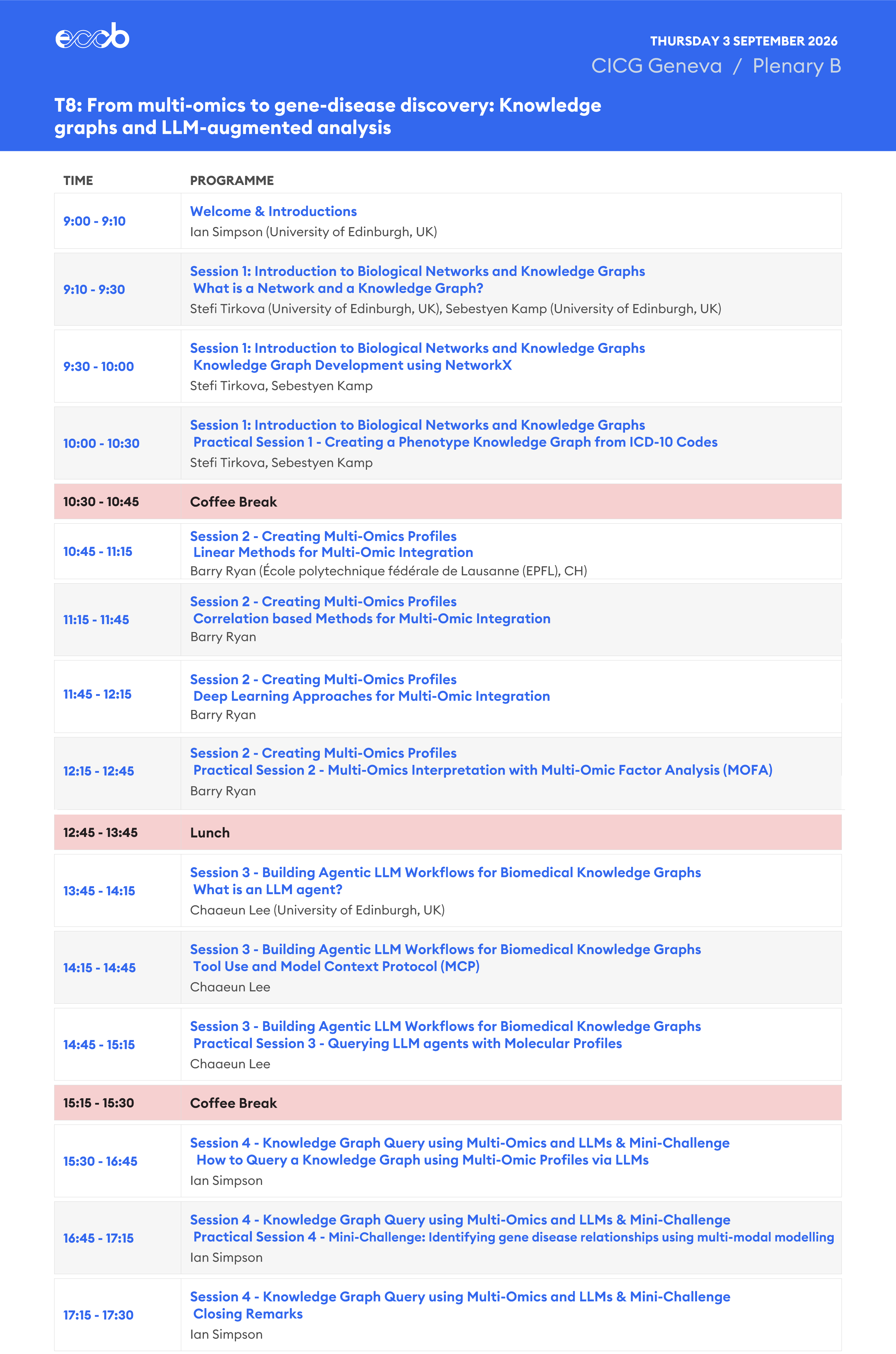
T8: From multi-omics to gene–disease discovery: knowledge graphs and LLM-augmented analysis
|
|
Organized by: Ian Simpson, Barry Ryan, Sebestyén Kamp and Chaeeun Lee Scientific area: Systems biology, multi-omics integration and modeling Overview: Network-based representations provide a powerful and flexible framework for modelling complex biological relationships and enabling diverse downstream analyses. Knowledge graphs, a specialised class of networks, organise biological entities and their known relationships into structured, interconnected representations and are widely used in applications such as drug discovery, gene–phenotype mapping, and functional annotation. Recent advances in large language models (LLMs), together with the increasing availability of rich multi-omics datasets, enable these graphs to be queried, contextualised, and interpreted in new ways. Multi-omic profiling captures complementary molecular information across biological layers, while LLMs provide intuitive interfaces for reasoning over high-dimensional data and structured knowledge. These developments create new opportunities for combining multi-omic learning with LLM reasoning over biomedical knowledge to enhance the evidence supporting gene–disease relationship discovery. This tutorial provides a practical, end-to-end introduction to developing and analysing biomedical knowledge graphs augmented with multi-omic molecular profiles and LLMs. Participants will work hands-on with real-world molecular and clinical data in the context of human disease, building custom knowledge graphs, learning multi-omic feature representations independently of data integration, and applying LLM based workflows for querying and reasoning over these graphs. The tutorial covers core network concepts, network-based analysis methods, linear and deep learning approaches for multi-omic feature learning, and simple practical LLM prompt engineering and fine-tuning techniques.
|
|
| 9:00 - 12:45 (half day AM) - Room 14 |
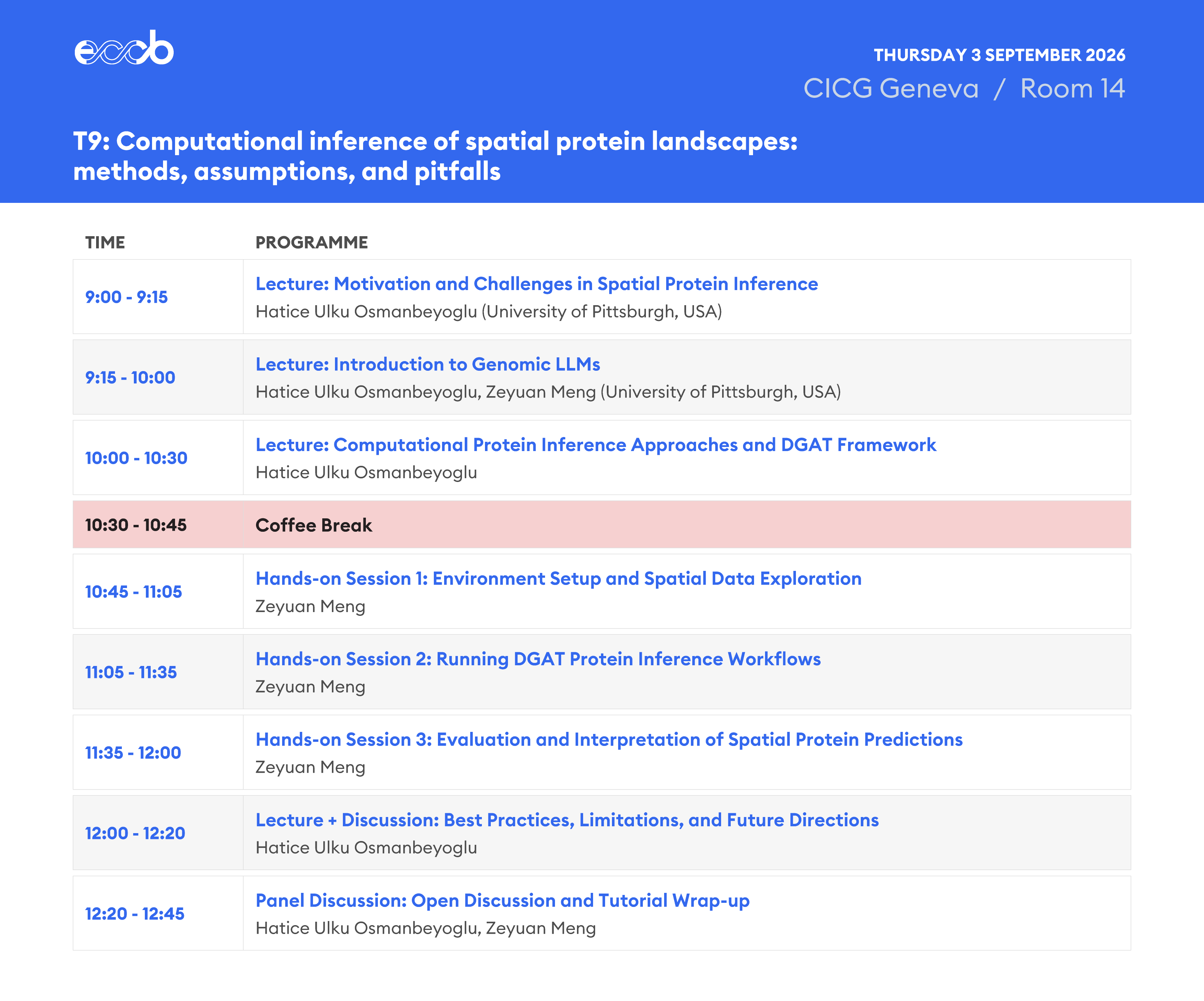
T9: Computational inference of spatial protein landscapes: methods, assumptions and pitfalls
|
|
Organized by: Hatice Ulku Osmanbeyoglu Scientific area: Systems biology, multi-omics integration and modeling Overview: Spatial transcriptomics enables high-resolution mapping of gene expression in tissue, yet protein abundance—the functional driver of cellular behavior—remains challenging to measure at a comparable scale. To address this gap, computational methods aim to infer protein expression from transcriptomic data, with some recent approaches explicitly incorporating spatial context. This tutorial provides an introduction to computational inference of protein expression, focusing on methods based on single-cell and spatial omics technologies. We will briefly introduce major spatial omics technologies and multimodal platforms, before surveying major computational paradigms—including graph-based and neural network–based approaches—and highlighting their underlying assumptions, strengths, and limitations. The tutorial integrates conceptual lectures with hands-on sessions using Python and Jupyter notebooks. Participants will apply representative workflows to real spatial omics datasets, visualize inferred protein landscapes, and evaluate robustness, spatial coherence, and biological plausibility. By focusing on critical assessment and best practices rather than software usage alone, the tutorial aims to equip participants to responsibly apply spatial protein inference methods and interpret and report results with appropriate rigor. This tutorial is intended for computational biologists and bioinformaticians seeking to understand, apply, and critically evaluate protein inference methods in modern spatial omics studies.
|
|
| 9:00 - 12:45 (half day AM) - Room 11 & Room 12 |
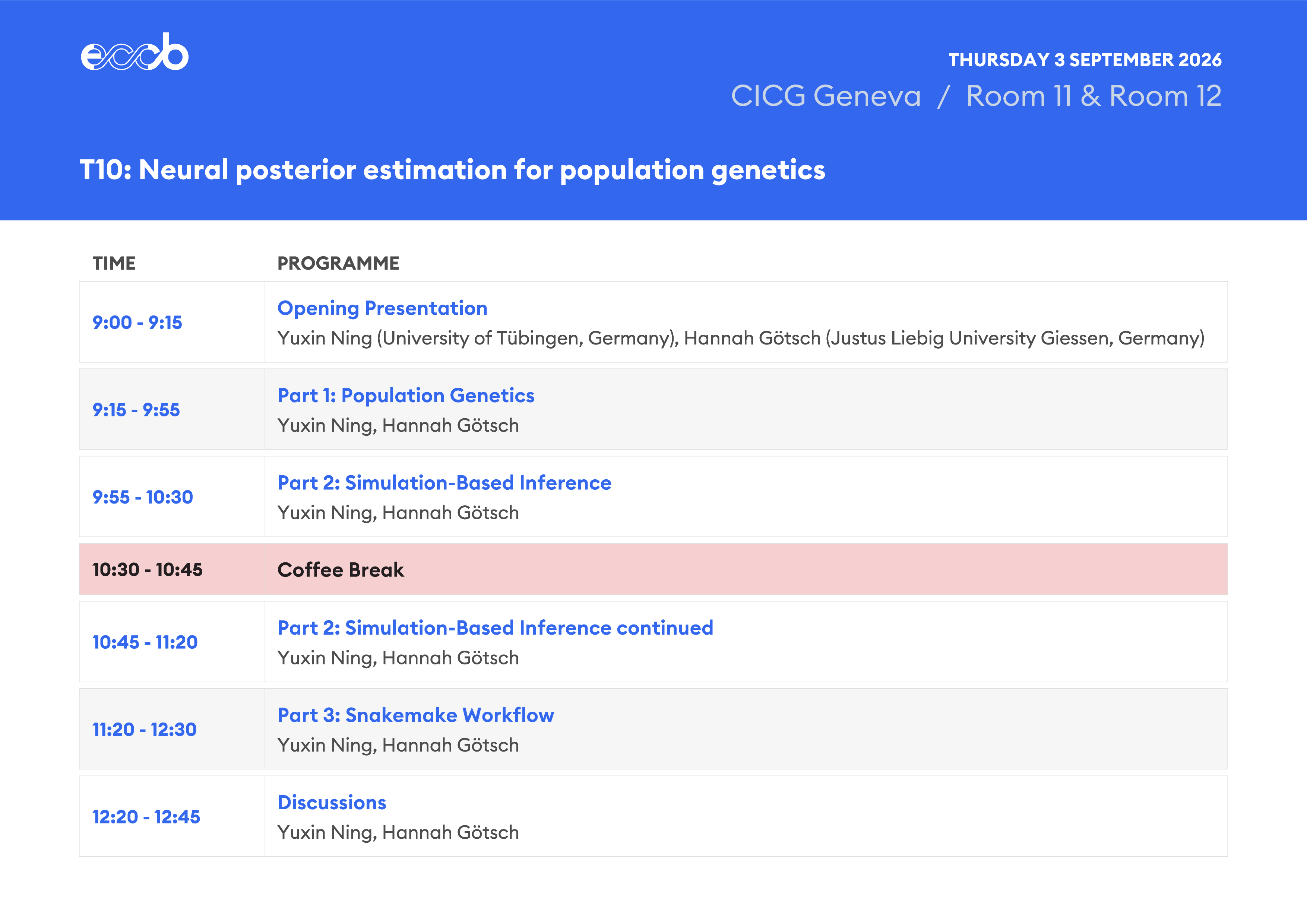
T10: Neural posterior estimation for population genetics
|
|
Organized by: Yuxin Ning, Hannah Götsch and Franz Baumdicker Scientific area: Biodiversity, sustainability, and environmental bioinformatics Overview: This tutorial focuses on simulation-based inference (SBI) using neural posterior estimation (NPE) for population genetic tasks. For population geneticists, it remains challenging to infer population parameters of interest when the likelihood of the model is intractable. When realistic simulations are available, SBI provides a practical likelihood-free framework combining efficient coalescent simulation, population genetic modeling, and machine learning methods such as normalizing flow networks. Motivated by this, this tutorial presents a complete and streamlined workflow to address a likelihood-free estimation task in population genetics. It demonstrates core components of SBI through exemplary use cases, hands-on training of neural posterior estimators using the sbi Python package and applying NPE to population genetic problems using genetic data simulated with msprime. The session concludes with an introduction to the Snakemake pipeline popgen-npe that automates the whole process. After completing the tutorial, participants will understand the NPE workflow in a population genetics context, be able to simulate genetic data and summary statistics to train and evaluate neural posterior estimators. The tutorial also aims to provide a foundation for extending this workflow to more complex and specialized research applications. The tutorial is intended for an intermediate audience with basic knowledge of Python and population genetics. No prior experience with SBI or NPE is required
|
|
| 13:45 - 17:30 (half day PM) - Room 14 |
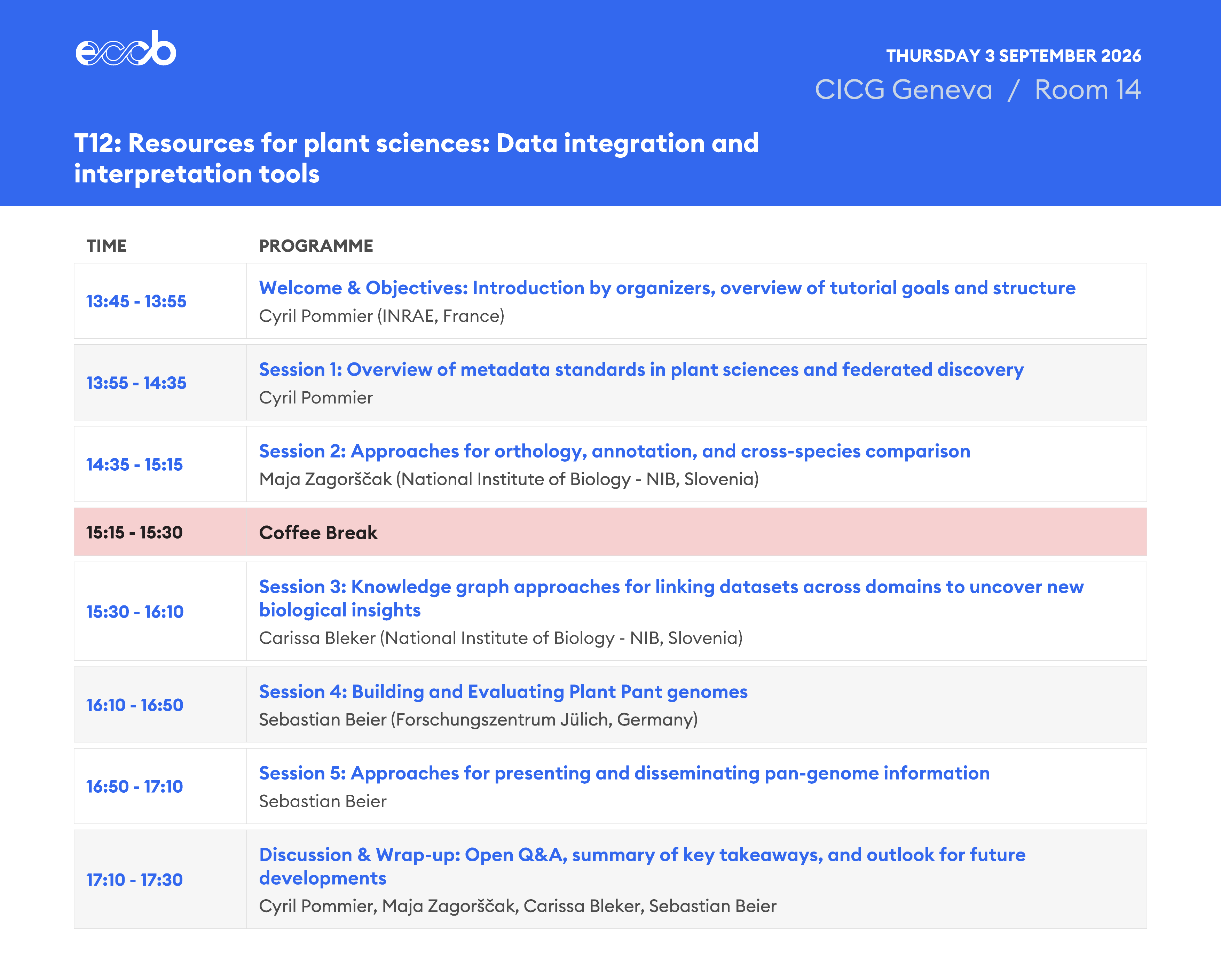
T12: Resources for plant sciences: data integration and interpretation tools
|
|
Organized by: Kristina Gruden, Sebastian Beier, Cyril Pommier and Maja Zagorščak Scientific area: Systems biology, multi-omics integration and modeling Overview: Plant sciences are rapidly evolving, producing large and heterogeneous datasets from phenotyping, multi-omics, and pan-genome studies. Managing and analysing these data requires clear standards, interoperable infrastructures, and computational approaches that support integration across different data types. This workshop provides an overview of key resources, beginning with community-driven metadata standards, federated portals for data discovery, and repositories for long-term archiving. Participants will then examine comparative genomics methods for identifying orthologs and functional relationships across species, followed by knowledge graph frameworks that integrate datasets from multiple sources to enable new biological insights. The program continues with recent advances in pan-genome research, emphasizing assessment of genome assemblies, annotations, and variant detection, with attention to sequencing data quality. Strategies for connecting genotypic and phenotypic diversity through presence/absence variation and structural rearrangements will also be presented, alongside effective practices for sharing and visualizing pan-genome information. By the end of the workshop, attendees will gain familiarity with plant data standards, comparative genomics methodologies, and knowledge graph approaches, and will gain practical insights into pan-genome evaluation and visualization. The session is aimed at an introductory to intermediate level and will give practical insights for plant scientists, bioinformaticians, and data managers working with diverse plant data.
|
|
| 13:45 - 17:30 (half day PM) - Room 11 & Room 12 |
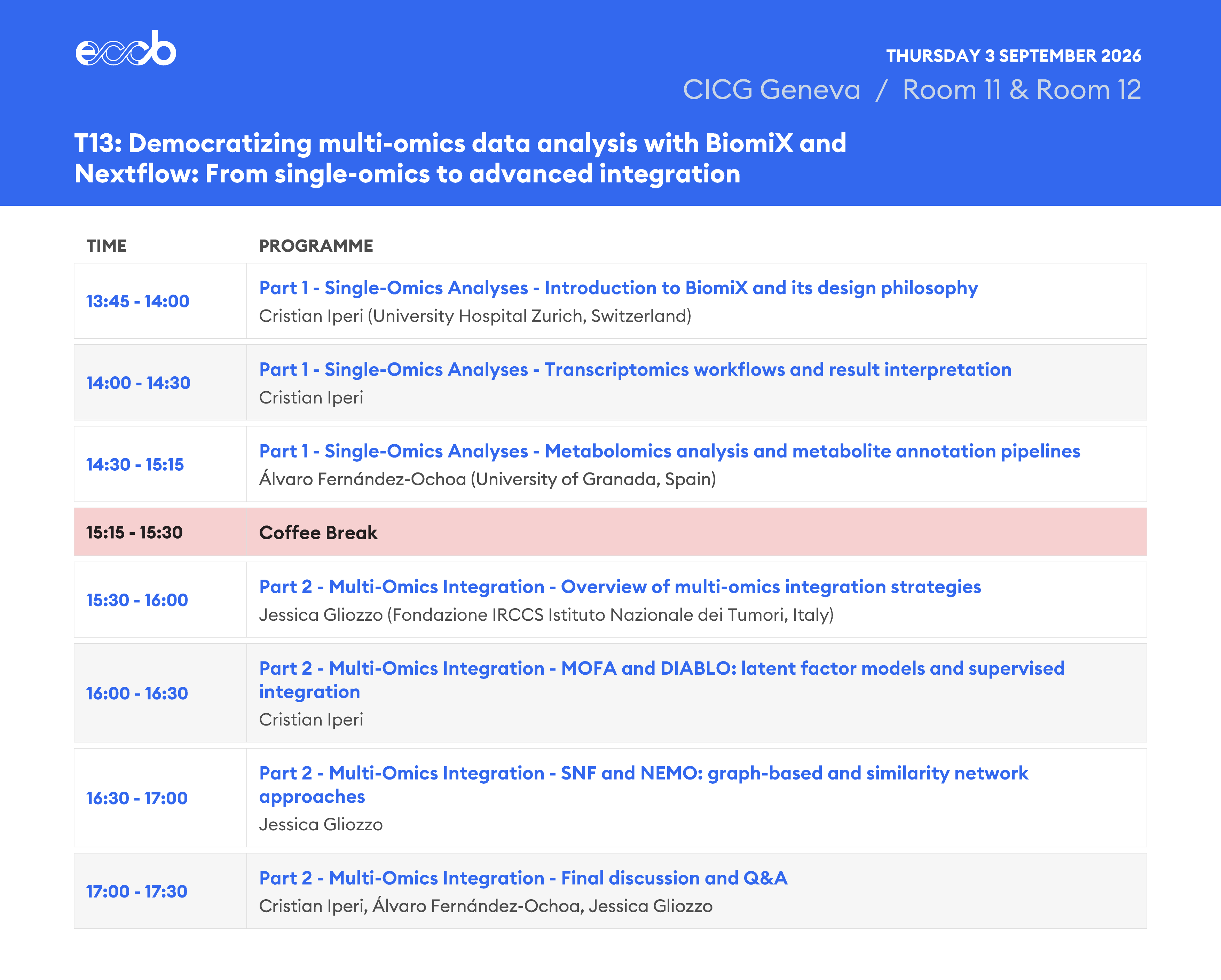
T13: Democratizing multi-omics data analysis with BiomiX and Nextflow: from single-omics to advanced integration
|
|
Organized by: Cristian Iperi (USZ Universitätsspital Zürich, Switzerland), Jessica Gliozzo (Fondazione IRCCS Istituto Nazionale dei Tumori, Milan, Italy) and Álvaro Fernández-Ochoa (University of Granada, Spain) Scientific area: Systems biology, multi-omics integration and modeling Overview: This tutorial presents BiomiX, a user-friendly bioinformatics tool for the analysis and integration of multiomics data, developed to democratize access to complex bioinformatics workflows. BiomiX enables integrated analysis of transcriptomics, metabolomics, methylomics, clinical, and unlabeled omics data by combining standard single-omics pipelines with advanced multi-omics integration approaches, including MOFA, DIABLO, NEMO, and Similarity Network Fusion (SNF). A recent Nextflow implementation further enhances scalability, reproducibility, and ease of deployment across computational environments. The first part of the tutorial focuses on single-omics analyses, with particular emphasis on metabolomics workflows and metabolite annotation. The second part addresses multi-omics integration, introducing the conceptual foundations of different integration methods, practical guidance on parameter selection, and strategies for interpreting biologically meaningful results using BiomiX interpretation modules and external resources. BiomiX is supported by an open and well-documented ecosystem, including a dedicated website, a GitHub repository maintained by the BiomiX consortium , and publicly available video tutorials. These resources allow participants to continue learning and applying the tool beyond the tutorial and facilitate rapid adoption within the broader research community. Through hands-on heterogeneous examples and real-world use cases, participants will learn how to analyze omics datasets, configure reproducible Nextflow pipelines, and integrate multiple molecular layers without requiring advanced programming skills. By the end of the tutorial, attendees will be able to apply BiomiX to their own datasets and confidently perform multi-omics analyses that support systems-level biological insights.
|
|
| 13:45 - 17:30 (half day PM) - Room 2 |
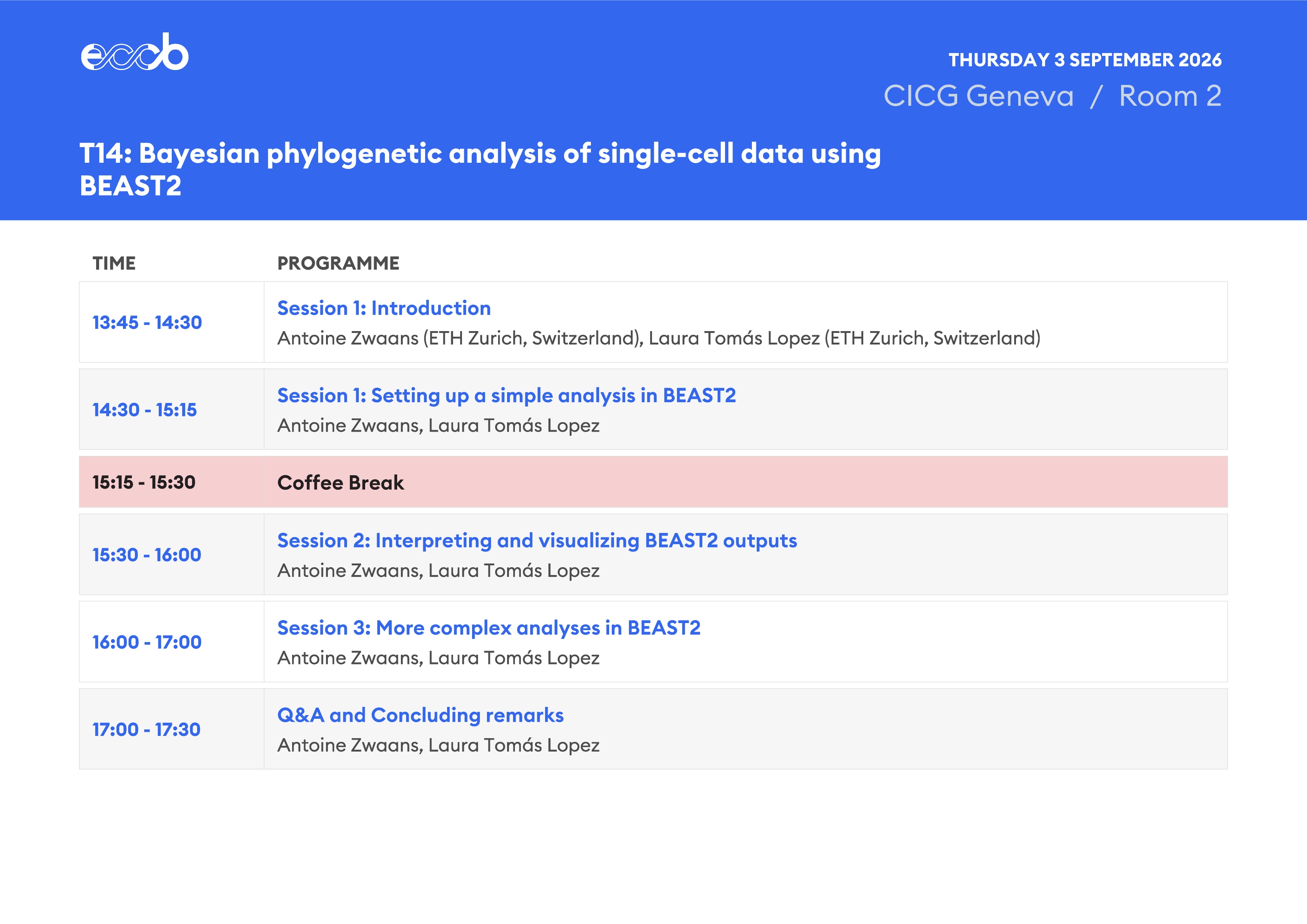
T14: Bayesian phylogenetic analysis of single-cell data using BEAST2
|
|
Organized by: Antoine Zwaans, Nicola Mulberry, Julia Pilarski and Laura Tomás Scientific area: Systems biology, multi-omics integration and modeling Overview: This tutorial provides an introduction to Bayesian phylogenetic analysis of single-cell data in BEAST2. BEAST2 enables the joint inference of time-scaled cell lineage trees and cell population dynamic parameters–such as cell division, death, and differentiation/migration rates–from single-cell lineage data. A growing set of software packages in BEAST2 integrate a range of single-cell modalities (CRISPR-Cas lineage tracing barcodes, scWGS, scRNA) for inference, finding applications to the study of developmental and cancer biology. The tutorial will combine theoretical concepts with hands-on experience running BEAST2 analyses. In the first part of the tutorial, participants will be given an overview of Bayesian phylogenetic methods applicable to single-cell data and the corresponding BEAST2 inference pipeline. The second part will consist of a practical exercise, showcasing an example application of BEAST2 to curated datasets using the SciPhy package, and will cover all steps of a typical inference workflow, including preparing input data, configuring editing/mutation and phylodynamic models of cell growth, and interpreting outputs. The third session will discuss how the pipeline introduced can be expanded with more complex and/or downstream analyses and integrate additional modalities such as single-cell RNA sequencing data. With this tutorial, participants will gain in-depth knowledge of single cell phylogenetics, and the ability to integrate BEAST2 into a research workflow.
|
|
Workshops
| Time | Activity |
|---|---|
| 9:00 - 17:30 (full day) - Room 16 |
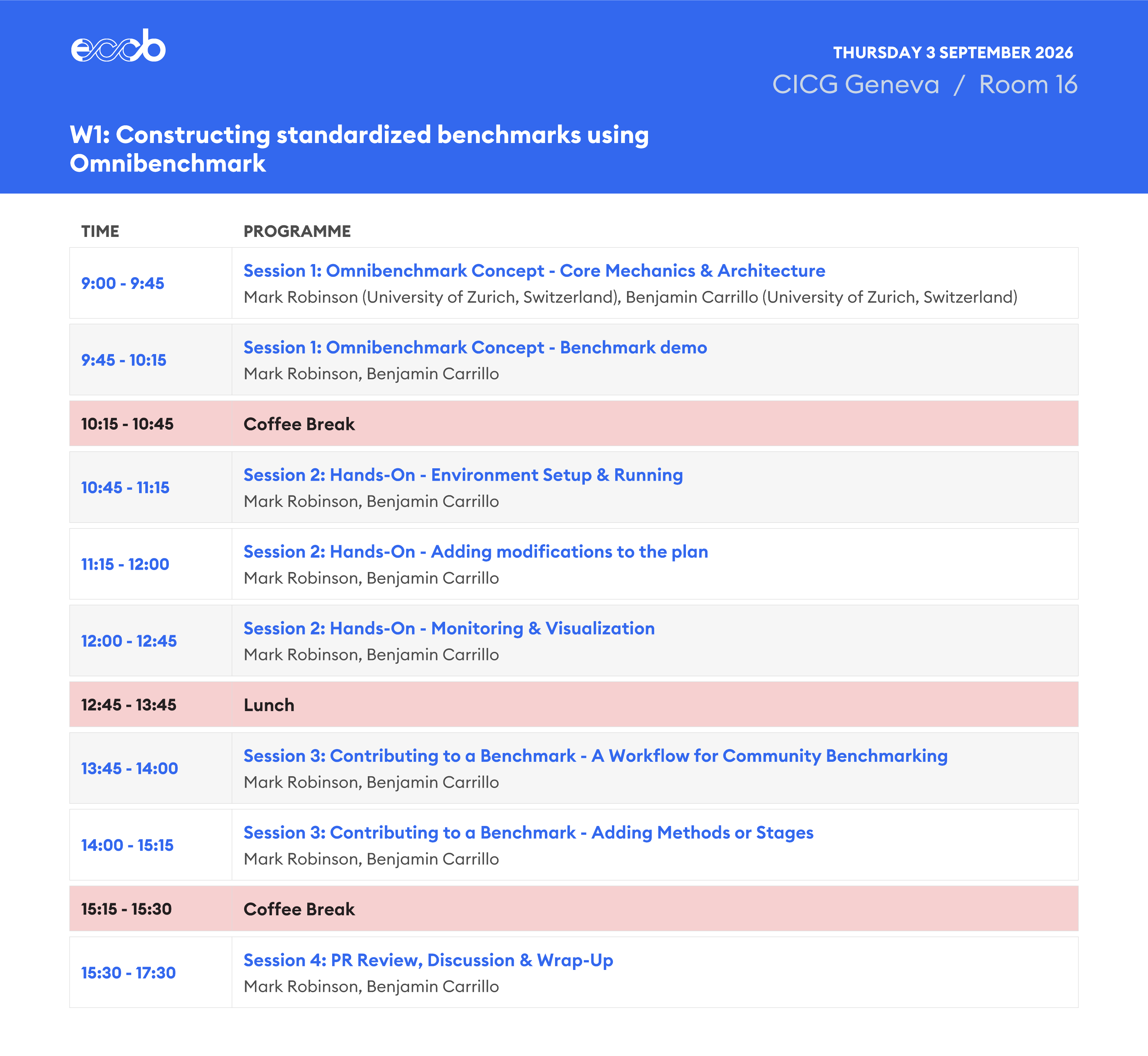
W1: Constructing standardized benchmarks using Omnibenchmark
|
|
Organized by: Mark Robinson and Ben Carrillo Scientific area: Benchmarking Abstract: Benchmarks are formal comparisons of computational methods, with a set of independently useful artifacts to go with it (e.g., software environments, data, code, etc.). The goal of a benchmark is to provide a review of the developments for a well-defined computational task by summarizing the available methods and their merits. Importantly, selecting a single best method is not the ultimate goal, but rather to arrive at a set of suitable methods for a subtask. Benchmarks employ a range of (sometimes domain-specific) techniques, including the generation of synthetic datasets that mimic real data or using ground truth derived from real experimental data or from biology; notably, generating appropriate reference datasets is resource intensive. Then, performance criteria are defined for the task at hand (the importance of which can vary by researcher) and methods are evaluated; in some cases, relevant criteria may need to be developed as new understanding of data and methods emerge. This hands-on workshop is designed for and is relevant for all computational biologists, because benchmarks represent the evidence we collect to demonstrate the merit of computational methods. The goal of the workshop is to equip participants with the skills necessary to design and run their own Omnibenchmark for a defined task in computational biology.
|
|
| 9:00 - 17:30 (full day) - Plenary AD |
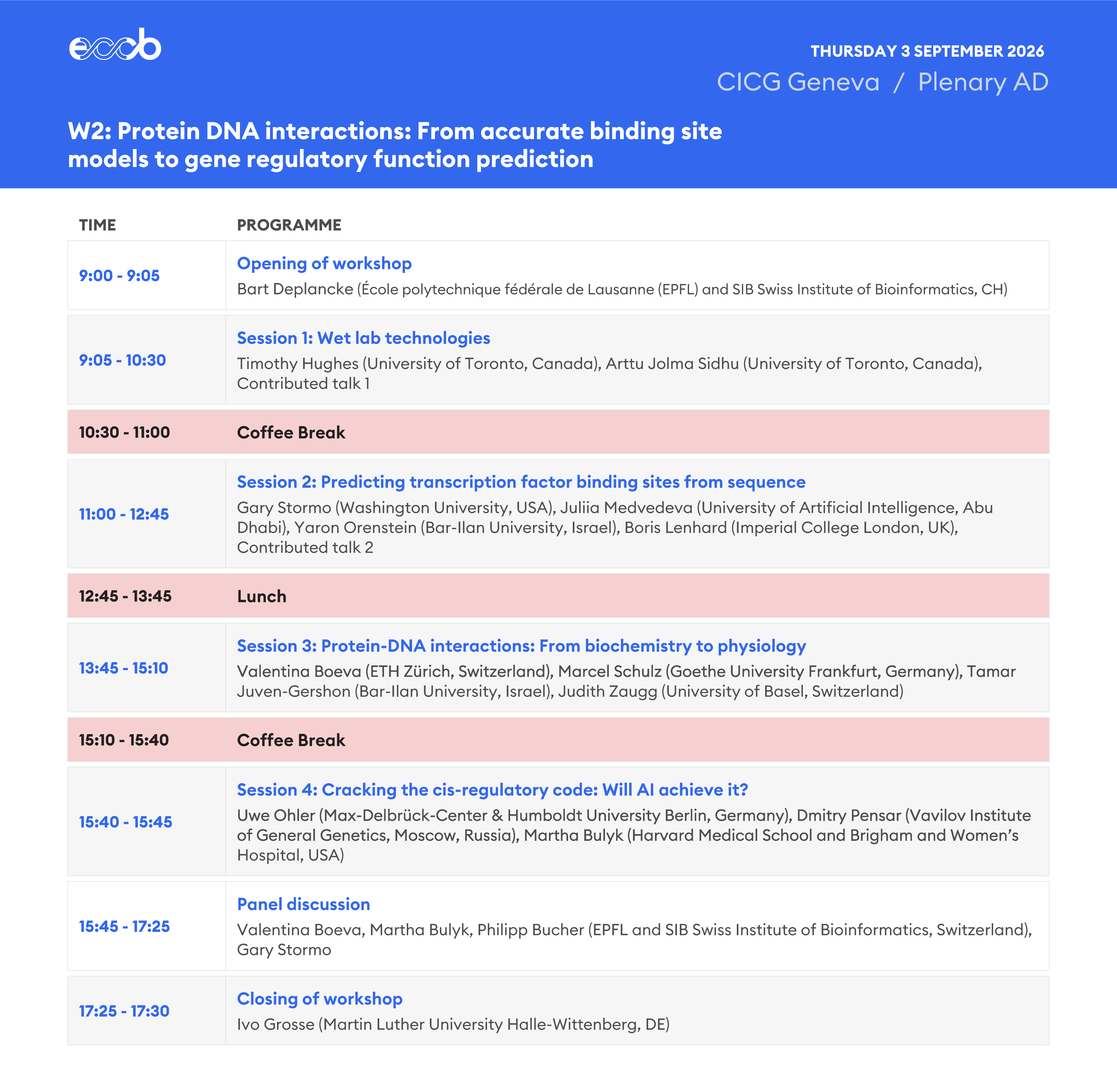
W2: Protein DNA interactions: from accurate binding site models to gene regulatory function prediction
|
|
Organized by: Bart Deplancke, Jan Grau, Ivo Grosse and Vsevolod Makeev Scientific area: Transcriptomics and gene regulation Overview: Predicting gene expression from genomic DNA sequence is a long-standing goal in computational biology. Despite massive scientific efforts, the accuracy of such predictive models remains limited. For humans, we are in the fortunate situation that one major building block of this problem has been largely solved, namely modelling the individual binding specificity of all human transcription factors (TFs), which can now be used to predict their binding regions in enhancers or promoters of genes. However, there are additional determinants of gene expression including the cooperation and competition of TFs, regulatory element communication, chromatin structure and other epigenomic factors, genomic variation in individuals, and condition-specific TF availability and dose effects that are not fully captured by current computational models. This workshop is targeted at scientists working in regulatory genomics or currently entering the field, who would love to (i) learn about the current state of TF binding prediction and/or (ii) contribute to further community efforts of developing more comprehensive models of gene regulation. We explicitly invite also scientists addressing such questions with an experimental focus, since previous advances in elucidating the binding specificity of human TFs relied on innovative in-vitro and in-vivo assays, and future initiatives going beyond this stage will require similarly tailored experiments. The workshop program will feature invited talks by experts in TF binding prediction and in wet-lab technologies, contributed talks from workshop participants, and a panel discussion on the potential and limitations of AI-based methods for predicting gene expression from sequence.
|
|
| 9:00 - 12:45 (half day AM) - Plenary C |
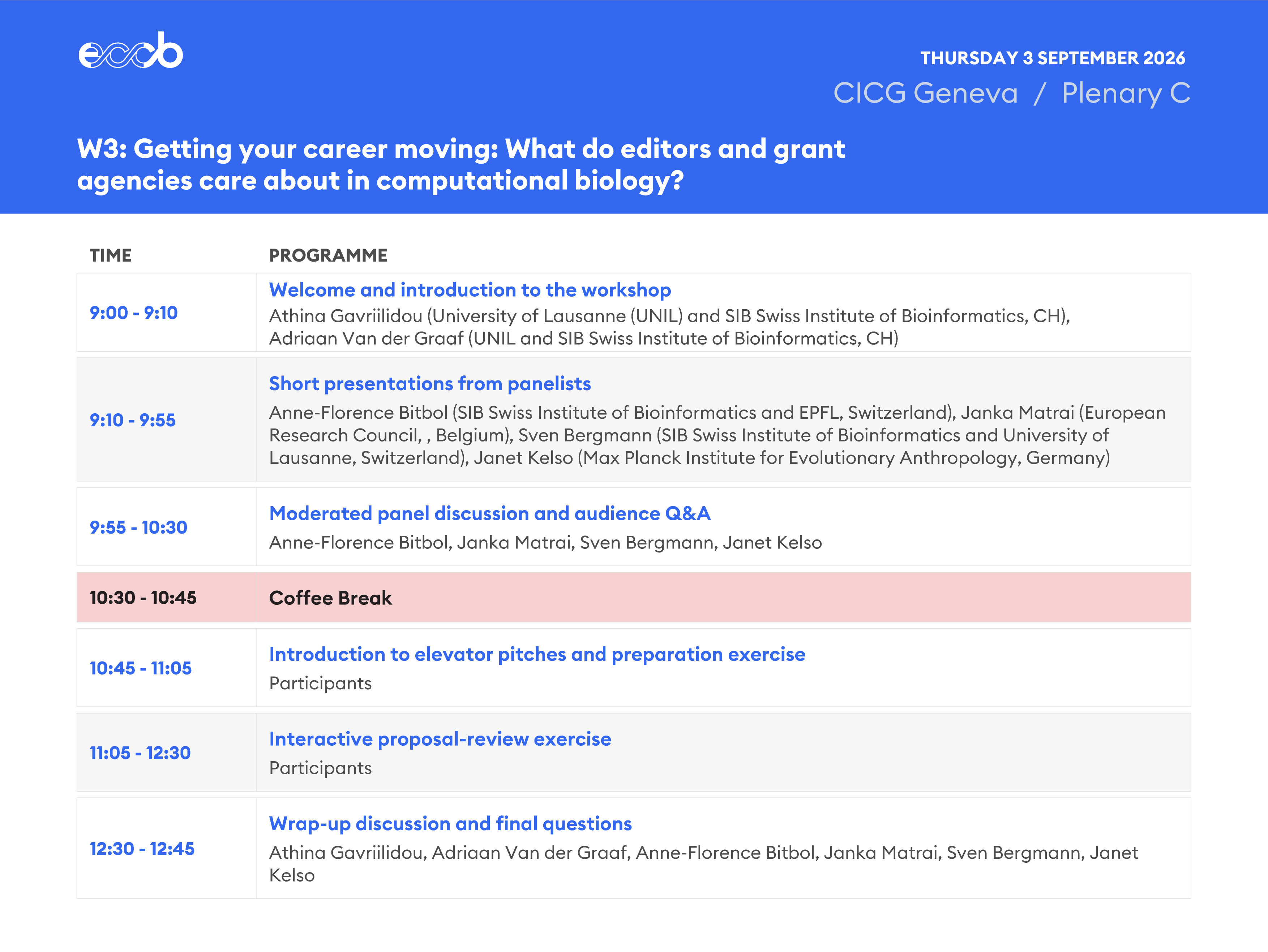
W3: Getting your career moving: what do editors and grant agencies care about in computational biology?
|
|
Organized by: Athina Gavriilidou, Adriaan van der Graaf and Zoltán Kutalik Topic: soft skills, editors and grant applications Overview: Scientists don’t always get what they want: a paper gets rejected, a grant is not awarded, or, you’re not getting the job you applied for. Oftentimes, it’s hard to know what are the underlying reasons for your rejection, making it hard to stay motivated to keep going. In this workshop, attendees will have the opportunity to meet the decision-makers: journal editors and grant panelists. These panel members will share their reasoning of a decision, helping you understand what to improve, and how to move forward in the next step of your career. This workshop will be in three parts:
Participants of this workshop will have the chance to connect with decision-makers of high-profile journals and multi-national funding agencies and get an insider’s view of their expectations. Young researchers are especially encouraged to attend.
|
|
ELIXIR workshops
| Time | Activity |
|---|---|
| 9:00 - 12:45 (half day AM) - Room 3 |
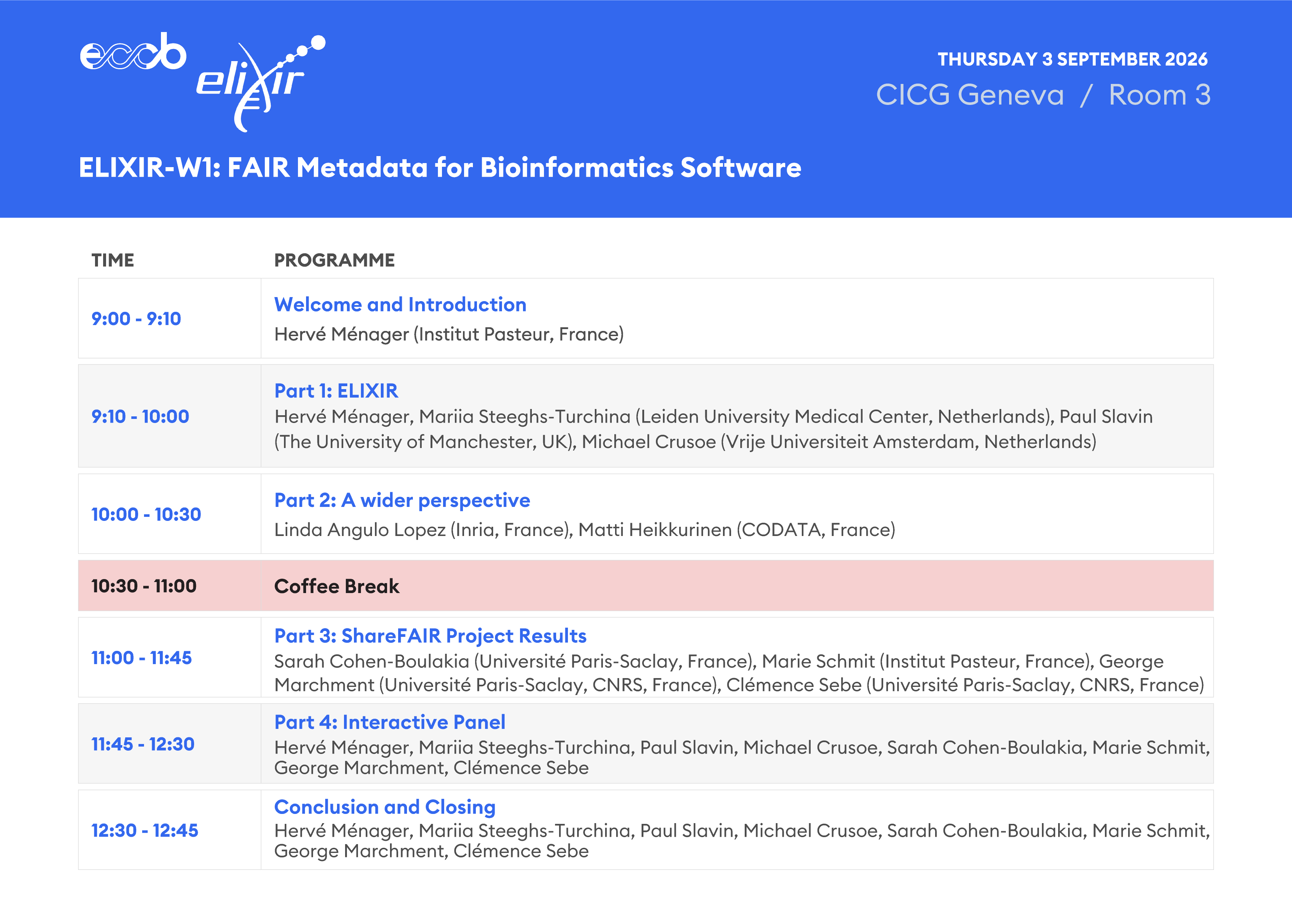
ELIXIR-W1: FAIR metadata for bioinformatics software
|
|
Organized by: Hervé Ménager, Sarah Cohen-Boulakia Topic: FAIR metadata Overview: Research software is essential to addressing contemporary challenges in all areas of life sciences. Yet many valuable tools remain difficult to discover, use, and maintain due to inadequate or inconsistent metadata. Software metadata, i.e. structured information describing it, is fundamental to ensuring its FAIRness and sustainability throughout its lifecycle. This computational landscape is now experiencing a major evolution: the explosion of artificial intelligence in life sciences is transforming both software itself and how researchers use computational tools. AI-driven approaches are increasingly combined with traditional bioinformatics methods, creating complex ecosystems where algorithms, models, and data pipelines must work seamlessly together. This transformation amplifies the need for rich, standardized, and accurate metadata to document not only conventional tool characteristics but also model provenance, training data, performance metrics, computational requirements, and ethical considerations. This introductory workshop demonstrates how comprehensive metadata supports software sustainability through Software Management Plans (SMPs), enables reproducibility and interoperability across diverse computational approaches, facilitates accurate citation and attribution, and ensures transparency about tool capabilities and limitations. For developers and users alike, proper metadata documentation streamlines maintenance, attracts collaborators, increases software impact, and enables compliance with funding agency requirements. Participants will learn practical approaches using ELIXIR resources and community standards, including bio.tools, EDAM ontology, and SMPs. Through hands-on examples, attendees will gain actionable skills to make their bioinformatics and AI tools more FAIR, sustainable, and effective.
|
|
| 13:45 - 17:30 (half day PM) - Room 3 |
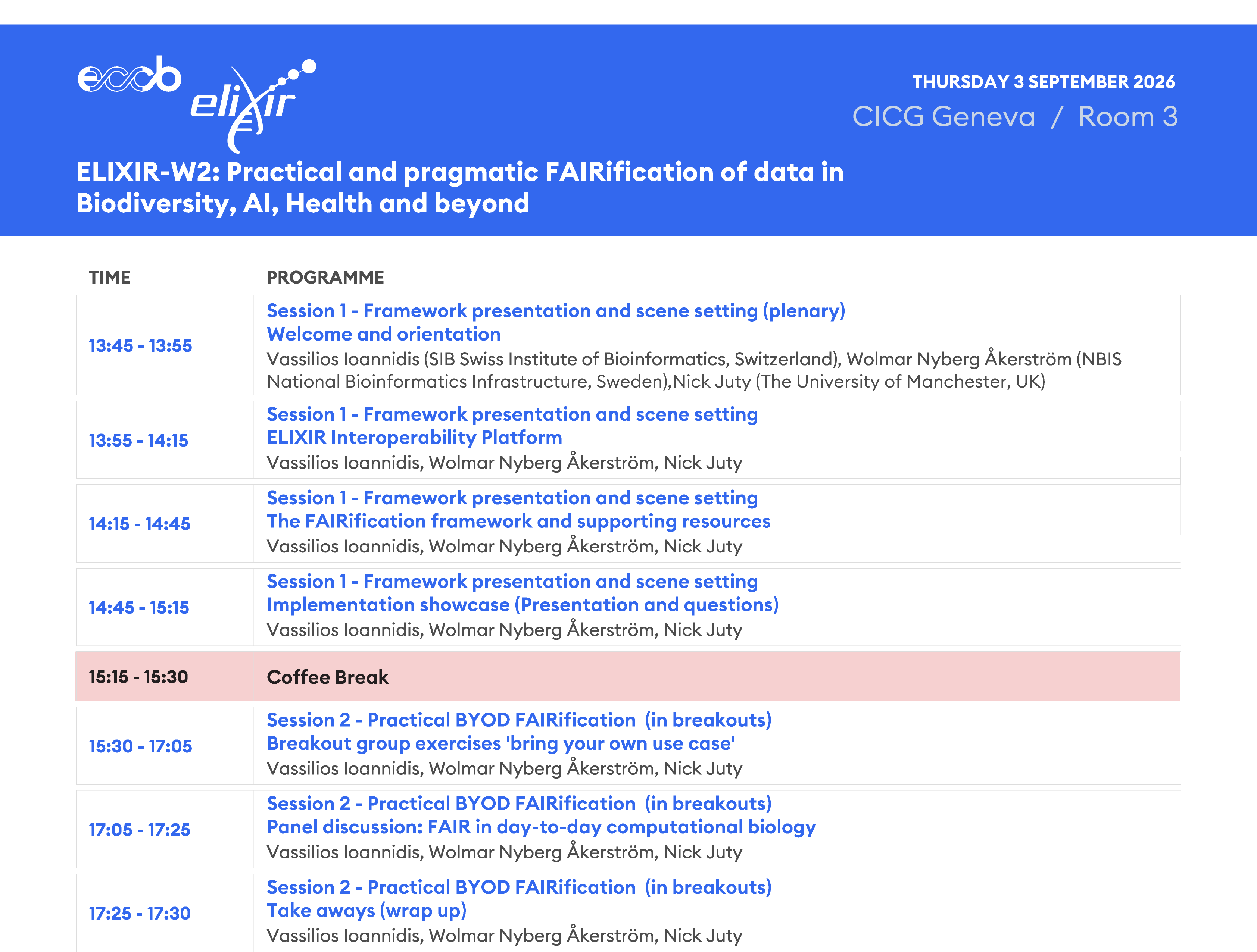
ELIXIR-W2: Practical and pragmatic FAIRification of data in biodiversity, AI, health and beyond
|
|
Organized by: Vassilios Ioannidis, Wolmar Nyberg Åkerström, Nick Juty Topic: Data sharing and implementation of the FAIR principles Overview: FAIR (Findable, Accessible, Interoperable, Reusable) principles are widely endorsed, but many computational biology projects still struggle to turn them into concrete, repeatable implementation steps that scale beyond a single dataset, tool, or team. This intermediate-level workshop focuses on practical FAIRification: a systematic, easy-to-adopt approach for improving the FAIRness of research outputs at any project scale. The workshop combines short instructional segments with interactive exercises and peer exchange, so participants can move from general principles to an actionable plan. We will work through a FAIRification framework that structures what to do, in what order, and with which templates and resources. Participants will see how this approach is used across domains through an implementation showcase drawn from ELIXIR (European life-sciences Infrastructure for biological Information) communities—scientific and technological expert groups in ELIXIR—illustrating common patterns that translate to many data types and methodologies, including biodiversity, health, and AI-facing workflows. Hands-on breakout activities guide participants to adapt the framework to their own context, identify immediate improvements, and discuss trade-offs that arise in day-to-day computational biology (multisource integration, data reuse pipelines, and reproducible analyses). FAIRification also supports AI-readiness by making digital assets and metadata easier to discover, combine, and repurpose in downstream computational and machine-learning workflows. Participants will leave with a structured starting point they can apply directly in their projects and teams. Learning outcomes:
|
|
ECCB tutorials and workshops evaluation
All tutorials and workshops selected for ECCB 2026 were rigorously evaluated by a minimum of three members from the ECCB Tutorials and workshops Committee, composed by:
- Patricia Palagi (Co-chair) | Director, Training SIB Swiss Institute of Bioinformatics
- Diana Marek (Co-chair) | Training Manager & Computational Biologist SIB Swiss Institute of Bioinformatics
- Rasool Saghaleyni | SciLifeLab (Sweden)
- Olivier Sand | CNRS (France)
- Farzana Rahman | Kingston University London (UK)
- Xavier Robin | SIB Swiss Institute of Bioinformatics (Switzerland)
- Ragothaman Yennamalli | SASTRA Deemed University (India)
- Joana Carlevaro | SIB Swiss Institute of Bioinformatics (Switzerland)
- Deepak Tanwar | SIB Swiss Institute of Bioinformatics (Switzerland)
- Geert van Geest | SIB Swiss Institute of Bioinformatics (Switzerland)
- Wandrille Duchemin | SIB Swiss Institute of Bioinformatics (Switzerland)
ELIXIR tutorials and workshops evaluation
Workshops selected for the ELIXIR track went through a process of internal selection through ELIXIR.
Rules and responsibilities
- All tutorials and workshops will take place onsite at the CICG venue in Geneva on September 3. To foster exchanges and interactivity during the sessions, participants, organizers and presenters must be present in-person
- Each tutorial/workshop will receive up to two free conference registrations for organizers or speakers
- ECCB will not cover travel and accommodation costs from tutorial/workshop organizers or presenters (read below)
ECCB will be responsible for:
- Providing a meeting venue with necessary technical equipment and catering services during coffee breaks
- Announcing the detailed schedule of the tutorial/workshop on the conference website
- Advertising on ECCB social media (based on material/info received from organizers)
- Update organizers on the number of registered participants
- ECCB and SIB Training Group reserve the right to cancel a scheduled tutorial/workshop if registration one month before the conference is less than 10 participants
Tutorial/workshop organizers will be responsible for:
- Finding financial support for the organization of the tutorial/workshop. Tutorial/workshop organizers are highly encouraged to seek independent funding for travel and accommodation of their speakers/presenters
- Finalising the programme/detailed schedule (incl. name of speakers) by 28 May
- Provide a draft of tutorial/workshop materials to the Tutorials and workshops Committee by 1 July
- Compiling and distributing material to the participants (if applicable) by 20 August
- Leading the event on 3 September at ECCB 2026
Open and FAIR
Note that organizers are responsible for ensuring that the tutorial and workshop materials are legally used, and that appropriate copyright permissions have been arranged. Lecturers will guarantee that tutorial and workshop materials are as much as possible open and FAIR. They agree that their material may be made available in any form by the conference to ECCB 2026 conference participants.