Beyond academia: talks, exhibition and career workshop
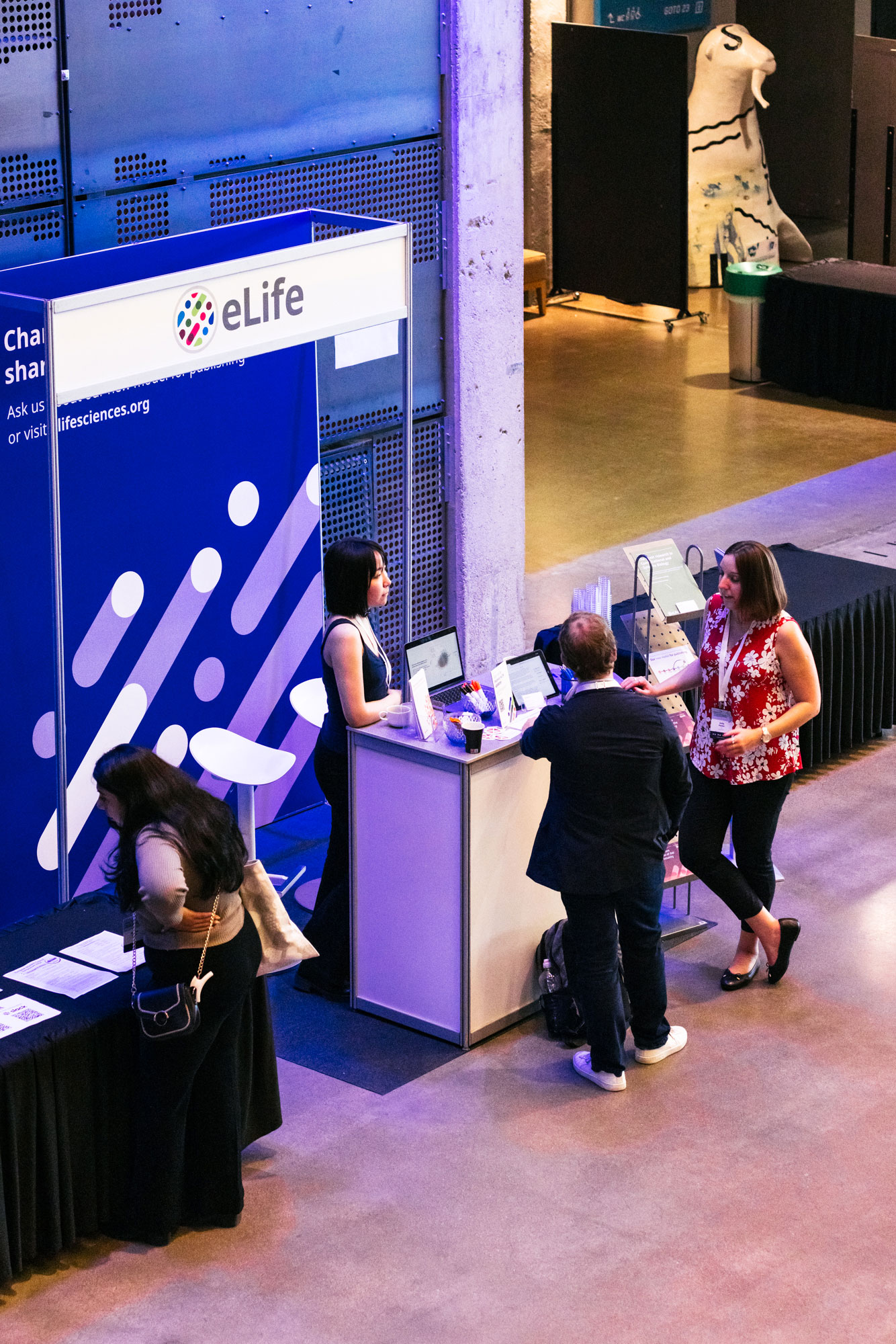
Meet the organizations at the forefront of innovation in bioinformatics and the life sciences. From pioneering research to practical solutions, the ECCB 2026 industry and innovation programme offers a unique opportunity to engage with industry partners, discover cutting-edge tools and approaches, and explore the diverse career paths that bioinformatics makes possible.
Industry and innovation session
Monday 31 August 2026, 14:45 - 15:45
Join a dedicated session showcasing scientific innovations and research advancements from industry. Invited speakers present recent technological developments and share perspectives on how industry is shaping the future of computational biology and the life sciences.
| Time | Activity |
|---|---|
| 14:50 - 15:10 |
Beyond FAIR: Making life-science data AI-ready and responsibly governed | Frontiers
|
|
Speakers : Sean Hill, Frontiers & Thomas Collin (Bioinformatics: Frontiers in Bioinformatics, Systems biology: Frontiers in Systems Biology) Computational biology generates and deposits data at remarkable scale, yet much of it is far harder to reuse than its presence in a repository suggests. A sequencing run, a single-cell object, a folder of microscopy images and a methods file may all satisfy a deposit mandate, but reusing them in practice still depends on tacit knowledge held by the producing lab, because the metadata needed to interpret them is incomplete. As foundation models become central to the life sciences, the stakes rise: AI performance in biology rests on data quality, readiness and governance. Closing the gap between data that is merely findable and data that is genuinely AI-ready is now a central challenge for reproducibility and discovery. This talk presents FAIR² Data Management as a response to that challenge. FAIR² extends the FAIR principles with two further dimensions: AI Readiness (AIR), data that machines can ingest, interpret and learn from; and Responsible AI, provenance, governance and accountability carried with the data, so that what models learn from can be traced and trusted. Clara, an AI data steward, works with the diverse and complex data that life-science research generates and turns a single submission into four peer-reviewed outputs: a citable Data Article, an interactive data Portal, an AI-ready data package, and a FAIR² certificate, with lifetime hosting, far faster than manual curation allows. The journals hosting this session reflect precisely the research culture FAIR² is designed to serve. Frontiers in Systems Biology, led by Prof. Yoram Vodovotz, breaks down the silos of modern research to promote integration and systems thinking across disciplines. Frontiers in Bioinformatics, led by Prof. Adam Godzik, provides an innovative forum for new bioinformatics discoveries, championing the tools and applications that bring computational insight to biological problems. Both journals advance open, reproducible science, and both accelerate discovery when the datasets underpinning their published research are not merely deposited but genuinely reusable and AI-ready. Looking ahead, we make the case for a future in which every dataset is a first-class research object: peer-reviewed, openly citable, machine-actionable and responsibly governed by design. The goal is not only to close the reproducibility gap, but to build a data foundation for AI in the life sciences that the whole community can build on and trust. |
|
| 15:10 - 15:15 |
From structure to function: geometric deep learning for engineering biomolecular interactions | Lemna Bio
|
|
Speaker: Lucien Krapp, Lemna Bio Geometric deep learning significantly increases the accuracy of interaction analysis and biomolecular engineering, pushing frontiers in medicine, biotech, and sustainability. Building on these advances, this talk introduces PeSTo for predicting binding interfaces, and CARBonAra for context-aware design across diverse functions, from binders and enzymes to RNA design. |
|
| 15:15 - 15:25 |
Assessing targets with AI agents | Roche
|
|
Speaker: Fabian Birzele, Roche Drug R&D is a high-stakes, multi-stage process where early errors often compound, leading to high failure rates in clinical translation. Addressing this requires a shift in how scientific decisions are made across the discovery continuum. This presentation introduces Target Nexus, an AI-powered platform designed to enhance scientific rigor and transparency in target discovery. By integrating agentic AI with internal proprietary data, Target Nexus acts as a co-analyst that bridges the gap between scientific hypotheses and audit-ready governance recommendations. The platform emphasizes a human-in-the-loop approach, ensuring that every AI-generated conclusion remains under scientist control and is traceable to primary sources. With a modular architecture that continuously learns from proprietary experiments and governance outcomes, Target Nexus moves beyond static applications, providing a dynamic system that evolves with organizational expertise. The project demonstrates the potential of interdisciplinary team science to transform data into informed decisions, ultimately aiming to increase the success and speed of drug discovery. |
|
| 15:25 - 15:35 |
Intelligence that Scales: Powerful Agents. Reproducible Workflows | seqera
|
|
Speaker: Jon Manning, seqera Pipeline development in pharma and biotech doesn't have the luxury of "good enough." Workflows have to be reproducible and auditable, while still keeping pace with the speed AI-driven discovery demands. This talk will showcase how the latest features of Seqera Platform, including Co-Scientist and Intelligent Compute, are changing the way scientists build, run, and scale bioinformatics, without compromising reproducibility. |
|
| 15:35 - 15:40 |
A programmer walks into a biology lab | smarts.bio
|
|
Speaker: Nir Orpaz, smarts.bio Software engineers have tools and habits they'd never give up - version control, fast iteration, the freedom to try things and see what breaks. Biology rarely imported any of them. Yet the tools biologists need often already exist, from image analysis to models like Boltz-2, just locked behind cost, setup, and friction. A computer scientist's short stories from the lab on what changes (and what becomes possible) when you take the friction away. |
|
| 15:40 - 15:45 |
Exploring digital twins for indication and patient selection | iOnctura
|
|
Speaker: Giusy Di Conza, iOnctura |
|
Entrepreneurs' stories session
Wednesday 2 September 2026, 10:30 - 11:30
Join a dedicated session showcasing
| Speaker | Title |
|---|---|
| Samir Ounzain | CEO and co-founder of Haya Therapeutics |
From curiosity to company: Discovering hidden biology and building new medicines
|
|
Samir Ounzain, Ph.D., is a molecular biologist, entrepreneur, and co-founder and CEO of HAYA Therapeutics. His work has focused on unlocking the largely unexplored regulatory genome and translating that biology into new therapeutic approaches. Before founding HAYA, Samir was a project leader at Lausanne University Hospital (CHUV), where he discovered and characterized novel long non-coding RNAs in cardiovascular disease, including WISPER, which became the foundation of HAYA’s lead program. At HAYA, he is building a new class of precision RNA medicines that integrate computational biology, functional genomics and RNA therapeutics to identify disease-driving regulatory programs and reprogram pathological cell states. Under his leadership, HAYA has advanced its first program into clinical development and formed strategic collaborations, including with Eli Lilly and Company. Samir’s broader vision is to unite scientific curiosity, computational innovation, and emerging biology to uncover hidden disease mechanisms, define causal biology, and enable cellular reprogramming approaches that expand human healthspan and create new classes of medicines. He has been recognized as an emerging leader in biotechnology and life sciences, including In Vivo’s 30 Rising Leaders in Life Sciences (2026), Pharmaceutical Executive’s Emerging Pharma Leaders (2025), and The Medicine Maker Power List (2025), as well as the Andreas & Thomas Strüngmann Award for life-science entrepreneurship. |
|
| Jurgi Camblong | Founder & Executive Chairman of Sophia Genetics |
A journey in data driven medicine, from research to entrepreneurship
|
|
Dr. Jurgi Camblong, Ph.D., M.B.A., is a visionary entrepreneur who is pioneering the data-driven medicine movement around the world. In 2011, he founded SOPHiA GENETICS with Dr. Pierre Hutter and Prof. Lars Steinmetz and has successfully led the development of the company as CEO ever since. Jurgi was a member of the Advisory Council on Digital Transformation to the Swiss Government, is a board member of the Swiss Biotech Association and was personally recognized by EY as Emergent Entrepreneur of the Year in 2017, listed among the 50 Smartest Companies by the MIT Technology Review. Jurgi has been a member of the board of directors since March 2011. He is a molecular biologist (published in Cell, Science and Nature), has a Ph.D. in life sciences from the University of Geneva and an Executive M.B.A. in management of technology from EPFL/HEC Lausanne. |
|
Career workshop
Wednesday 2 September 2026, 11:30 - 13:00
Organized by the SIB People & Culture, this career workshop offers an open forum for early-career researchers to engage with professionals working across academia, industry, and the public sector. Through expert talks and facilitated discussions, participants gain first-hand insights into hybrid career paths within and beyond academic research.
The workshop is open to all ECCB 2026 attendees, upon registration (register here).
Part 1: Speaker presentations
Each speaker presents their career path, what proved key to their transition between academia and industry in either direction, and their current day-to-day role.
- Valérie Barbié | Director Clinical Bioinformatics at SIB Swiss Institute of Bioinformatics
- Fabian Birzele | VP, Global Head of Computational Biology & Medicine at Roche
- Moustafa Houmani | Cofounder & CEO at Lemna Bio
- Livia Parodi | Multi-Omics Scientist at L'Oréal
- Erik Studer | Senior Scientific Project Manager, Clinical Bioinformatics at SIB Swiss Institute of Bioinformatics
Part 2: Parallel activities
Participants choose one of two options:
Option A: CV reviews and career counselling with SIB People & Culture
10 minutes per person, nine slots total.
- Sandra Reinders | Senior People & Culture Manager at SIB
- Dala Egger | Head of People & Culture at SIB
- Vanessa Monteiro | People & Culture Manager at SIB
Option B: Speed networking
A group of four participants meets three experts, 10 minutes each. Booking through the form below is required.
Experts:
| Speaker | Title |
|---|---|
| Valérie Barbié |
Director Clinical Bioinformatics at SIB Swiss Institute of Bioinformatics
|
|
Valérie Barbié has been trained as a computer sciences engineer in France and the United States. After a few years as informatician at the National Scientific Research Center (CNRS) in France, she joined the pharmaceutical industry as a bioinformatician. Over 13 years in this industry, she has been working mainly in the field of biomarkers analysis and personalized medicine. Since 2015 she is leading the Clinical Bioinformatics group at SIB Swiss Institute of Bioinformatics, which provides expertise and support to hospitals and industry for the organization, analysis and interpretation of patient-related data, and to promote training and general public information. |
|
| Fabian Birzele |
VP, Global Head of Computational Biology & Medicine at Roche
|
|
Fabian Birzele is a bioinformatician by training who moved to Industry during his PostDoc. As a bioinformatics scientist he supported projects along the full pharma value chain. Today he is the Vice President and Global Head of Computational Biology and Medicine at Roche / Genentech. As part of the newly formed Computational Sciences Center of Excellence, his department enables data-driven decision-making from disease understanding and target identification through clinical phase III across all disease areas in Roche / Genentech and drives innovation in new computational approaches, AI and biostatistics. |
|
| Jurgi Camblong |
CEO and co-founder of Sophia Genetics
|
| Andrea Cavallini |
Scientific Relations Manager at SIB Swiss Institute of Bioinformatics
|
|
Andrea Cavallini is a Scientific Relations Manager at the SIB Swiss Institute of Bioinformatics. He has more than 12 years of experience managing innovation and research projects across nonprofit organizations, academia, and industry. His work has focused on in vitro diagnostics, clinical operations, and global health, with an emphasis on guiding projects from concept to implementation, developing partnerships, and providing strategic and technical guidance. At SIB, he contributes to initiatives related to ELIXIR and EOSC and supports grant development and cross-institutional collaborations. He holds a PhD in Biosensors and Bioengineering from EPFL and an MSc in Biotechnology from the University of Bologna. |
|
| Thomas Collin |
Journal Manager, Frontiers
|
|
Thomas Collin is a Journal Manager at Frontiers Media, where they have spent six years leading a portfolio of academic journal titles, shaping growth and launch strategies, building relationships with stakeholders worldwide, and are responsible for journal indexation and adherence to ethical standards. Before moving into publishing, Thomas worked in academic research, using metagenomics to reconstruct past lives, while also teaching human anatomy at the UCD School of Medicine. Thomas also spent 12 years working in forensics for various agencies. Thomas holds a BA (Hons), BSc, MA, and PhD (Medicine), and is passionate about early-stage researcher opportunities, scientific outreach, and open research. |
|
| Emma Duncan |
Senior Communications Manager at SIB Swiss Institute of Bioinformatics
|
|
My goal in 2020: move from molecular biology to science communications. The exact steps are a poor template, too shaped by the past and my own life choices to hand you ready-made. But a few principles held. I believe they'll keep my skills relevant – and help you make the switch – even as AI reshapes the field. This is what I'll share. And if you want to see my career path anyway? Well, it’s all on LinkedIn. |
|
| Moustafa Houmani |
Cofounder & CEO at Lemna Bio
|
|
Moustafa Houmani is co-founder and CEO of Lemna Bio, an EPFL spin-off. Lemna Bio develops the tools, intelligence, and experimental data to help drug discovery teams de-risk target biology and disease mechanisms early, before committing to costly chemistry efforts. Trained at EPFL as a biological engineer, he works at the intersection of computation, protein engineering, and wet lab experimentation. A second-time biotech founder, he is drawn to building systems that integrate computation and experimentation. At the workshop he looks forward to a candid conversation about the founder path: translating scientific research into a venture, building an early team, and navigating the realities of a deep-tech startup. |
|
| Samir Ounzain |
CEO and co-founder of Haya Therapeutics
|
|
Samir Ounzain, Ph.D., is a molecular biologist, entrepreneur, and co-founder and CEO of HAYA Therapeutics. His work has focused on unlocking the largely unexplored regulatory genome and translating that biology into new therapeutic approaches. Before founding HAYA, Samir was a project leader at Lausanne University Hospital (CHUV), where he discovered and characterized novel long non-coding RNAs in cardiovascular disease, including WISPER, which became the foundation of HAYA’s lead program. At HAYA, he is building a new class of precision RNA medicines that integrate computational biology, functional genomics and RNA therapeutics to identify disease-driving regulatory programs and reprogram pathological cell states. Under his leadership, HAYA has advanced its first program into clinical development and formed strategic collaborations, including with Eli Lilly and Company. Samir’s broader vision is to unite scientific curiosity, computational innovation, and emerging biology to uncover hidden disease mechanisms, define causal biology, and enable cellular reprogramming approaches that expand human healthspan and create new classes of medicines. He has been recognized as an emerging leader in biotechnology and life sciences, including In Vivo’s 30 Rising Leaders in Life Sciences (2026), Pharmaceutical Executive’s Emerging Pharma Leaders (2025), and The Medicine Maker Power List (2025), as well as the Andreas & Thomas Strüngmann Award for life-science entrepreneurship. |
|
| Livia Parodi |
Multi-Omics Scientist at L'Oréal
|
|
Livia Parodi holds a Bachelor’s in Molecular Biology and a Master’s in Medical Biology from the University of Padua. She earned her PhD at the Paris Brain Institute (Sorbonne University), focusing on unveiling the genetic background of rare neurodegenerative disorders. To enhance her computational skills, she then conducted postdoctoral research at the Center for Genomic Medicine (Massachusetts General Hospital, Boston), leveraging large population-based datasets to study the genetics of cerebrovascular disorders. In October 2023, she joined L’Oréal Advanced Research, where she works as a Multi-Omics Scientist. |
|
| Erik Studer |
Senior Scientific Project Manager, Clinical Bioinformatics at SIB Swiss Institute of Bioinformatics
|
Exhibition
Explore the ECCB 2026 exhibition and connect with organizations active in bioinformatics, data management, and the life sciences. Visit the booths to discover resources, tools, and services, and to engage directly with representatives.
- Discover how Abrinca Genomics helps researchers unlock the value of microbial genomic data through user-friendly bioinformatics software for genome assembly, annotation, analysis, and data management.
- Connect with ELIXIR and learn about its pan-European infrastructure for life science data.
- Explore Frontiers' approach to FAIR² data management and open research infrastructure.
- Learn about ISCB, the only global society representing computational biology and bioinformatics, and its work in training, publications, and career development.
- Speak with the ISCB Student Council about career development opportunities and community initiatives for students and early-career researchers.
- Learn how Lemna Bio is advancing biomolecular engineering through geometric deep learning.
- Explore how Seqera supports scalable and reproducible scientific workflows through modern pipeline orchestration and cloud-native infrastructure for bioinformatics and data-intensive life science research.
- Discover the bioinformatics resources, national and international initiatives, and services developed by the SIB Swiss Institute of Bioinformatics.
- Discuss with smarts.bio who provides an AI-powered bioinformatics platform for analysing genomics, proteomics, and transcriptomics data through a natural language interface, accessible to biologists and bioinformaticians alike.
- Connect with the State of Geneva and discover its impressive business support network of organizations that can fund, support, network or foster innovation.
- Speak with SwaPP (Swiss Association of Pharmaceutical Professionals) and learn about its network, training programmes, and professional development resources for specialists across pharma, biotech, and medtech.
Meet the experts
Meet the experts behind the leading bioinformatics SIB Resources, available through Expasy. During informal 15-minute sessions held during conference breaks, stop by the SIB booth to ask questions, enjoy live demonstrations and discover how these resources can support your research. The schedule will be available soon, and session notifications will be sent through the conference app.
Hear the latest updates from: